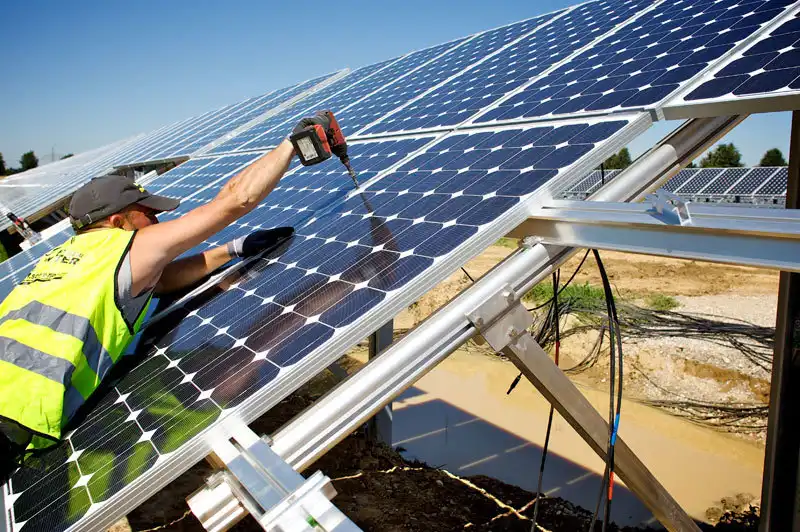
Nigeria imported photovoltaic panels worth N242.68 billion in the first half of 2025. This reflects ongoing demand for clean energy options.
The National Bureau of Statistics data shows N125.29 billion from January to March. April to June added N117.39 billion.
Declining Trend from 2024
The total dropped from N237.3 billion in Q4 2024. This suggests easing import pressure. However, solar panels rank high among imported goods. The shift ties to government plans for self-reliance in renewables.
Boosting Local Capacity
The Rural Electrification Agency reports Nigeria’s solar module production at 600 megawatts, up from 110 megawatts.
Key sites include a 100MW plant in Lagos and a 250MW facility in Abuja. Others operate in Idu and Port Harcourt. Over 50 renewable firms now thrive, compared to 10 previously.
Narrative Shift to Self-Sufficiency
Agency head Abba Aliyu emphasized, “We’re building domestic capability for clean energy transitions.” These efforts aim to cut import reliance.
They support widespread access to affordable power solutions.
Upcoming Import Curbs
Science and Technology Minister Uche Nnaji announced import limits via executive order. This prioritizes local content in tech and engineering.
The National Agency for Science and Engineering Infrastructure leads production with private partners. Local supply can meet needs, Nnaji claimed.
Leveraging Local Resources
Nigeria’s lithium reserves fuel battery development. Mini-grids for homes, hospitals, and schools advance off-grid options.
Nnaji shared, “I’ve relied on solar for three years, it’s reliable and effective.”
Caution on Rapid Bans
Consultants at PricewaterhouseCoopers warn against sudden import halts. Their analysis suggests phased reductions over three to five years.
This avoids supply gaps and investor pullback. Focus on quality standards and supportive policies is key.
State House Goes Solar
The Presidential Villa allocated N10 billion in the 2025 budget for a solar mini-grid. This raises the State House’s capital spend to N43.55 billion from N33.55 billion.
The project cuts grid dependence and offsets tariff rises. It signals broader trust in renewables for stability.
Future Energy Outlook
These steps blend imports with local growth. They promise better energy access and economic benefits. As Nigeria scales manufacturing, renewable adoption accelerates, fostering sustainability nationwide.







 Armenian Dram
 Ghana Cedi
 Gambian Dalasi
 Guinea Franc
 Nigerian Naira
 CFA Franc BEAC