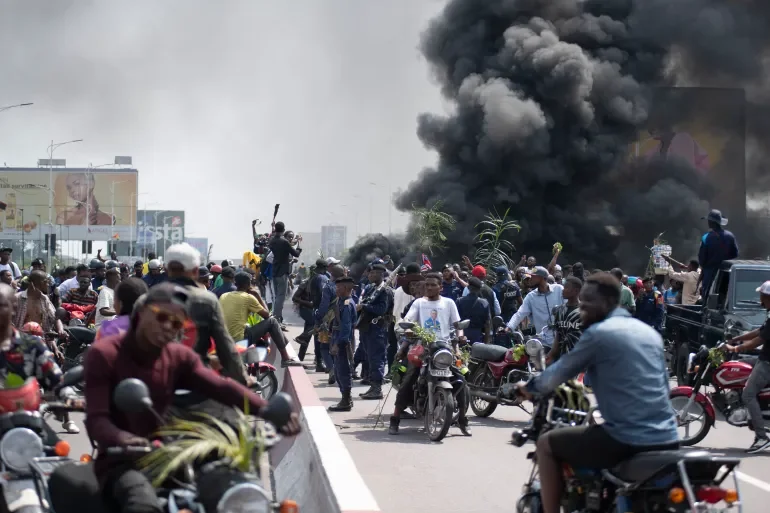
Intense combat has resumed in the eastern Democratic Republic of Congo, with military confrontations erupting across South Kivu province on Tuesday, December 2, 2025. The clashes involve the M23 rebel movement and Congolese government forces backed by coalition troops, marking a significant escalation in the volatile region.
The violence has spread to multiple strategic fronts, including Katogota-Luvungi, Kaziba-Haut Plateau, Tchivanga-Hombo, and Kasika-Mwenga. The intensity of the hostilities has triggered a new wave of displacement, as residents flee their homes to escape the crossfire.
Mutual Accusations
The rebel leadership has acknowledged the resumption of hostilities. Bertrand Bisimwa confirmed the engagements, while the group’s spokesperson, Lawrence Kanyuka, issued a statement accusing government troops of initiating attacks on densely populated zones. He characterized the rapidly deteriorating situation as devastating for the local civilian population.
Diplomatic Setback
This latest flare-up occurs less than a month after a diplomatic breakthrough in Doha, Qatar. On November 8, 2025, a peace framework was established to facilitate dialogue between the warring parties and pave the way for a lasting settlement.
However, persistent mutual accusations of ceasefire violations continue to undermine these diplomatic efforts, raising serious doubts about the durability of the agreement.
Strategic Control and Grievances
The M23 currently maintains a tight grip on vast territories within both North and South Kivu. Their stronghold reportedly includes key strategic hubs such as Goma and Bukavu, along with their respective airports.
Since their resurgence in 2022 under the command of Bisimwa and Emmanuel Sultan Makenga, the group has been at the center of regional geopolitical friction. While the Congolese government alleges that the rebels receive support from neighboring Rwanda—a claim consistently denied by both Kigali and the insurgency—the group maintains its armed campaign is a necessary response to state corruption, discrimination, and xenophobia within the Congolese political system.
Intense combat has resumed in the eastern Democratic Republic of Congo, with military confrontations erupting across South Kivu province on Tuesday, December 2, 2025. The clashes involve the M23 rebel movement and Congolese government forces backed by coalition troops, marking a significant escalation in the volatile region.
The violence has spread to multiple strategic fronts, including Katogota-Luvungi, Kaziba-Haut Plateau, Tchivanga-Hombo, and Kasika-Mwenga. The intensity of the hostilities has triggered a new wave of displacement, as residents flee their homes to escape the crossfire.
Mutual Accusations
The rebel leadership has acknowledged the resumption of hostilities. Bertrand Bisimwa confirmed the engagements, while the group’s spokesperson, Lawrence Kanyuka, issued a statement accusing government troops of initiating attacks on densely populated zones. He characterized the rapidly deteriorating situation as devastating for the local civilian population.
Diplomatic Setback
This latest flare-up occurs less than a month after a diplomatic breakthrough in Doha, Qatar. On November 8, 2025, a peace framework was established to facilitate dialogue between the warring parties and pave the way for a lasting settlement.
However, persistent mutual accusations of ceasefire violations continue to undermine these diplomatic efforts, raising serious doubts about the durability of the agreement.
Strategic Control and Grievances
The M23 currently maintains a tight grip on vast territories within both North and South Kivu. Their stronghold reportedly includes key strategic hubs such as Goma and Bukavu, along with their respective airports.
Since their resurgence in 2022 under the command of Bisimwa and Emmanuel Sultan Makenga, the group has been at the center of regional geopolitical friction. While the Congolese government alleges that the rebels receive support from neighboring Rwanda—a claim consistently denied by both Kigali and the insurgency the group maintains its armed campaign is a necessary response to state corruption, discrimination, and xenophobia within the Congolese political system.


 Armenian Dram
 Ghana Cedi
 Gambian Dalasi
 Guinea Franc
 Nigerian Naira
 CFA Franc BEAC