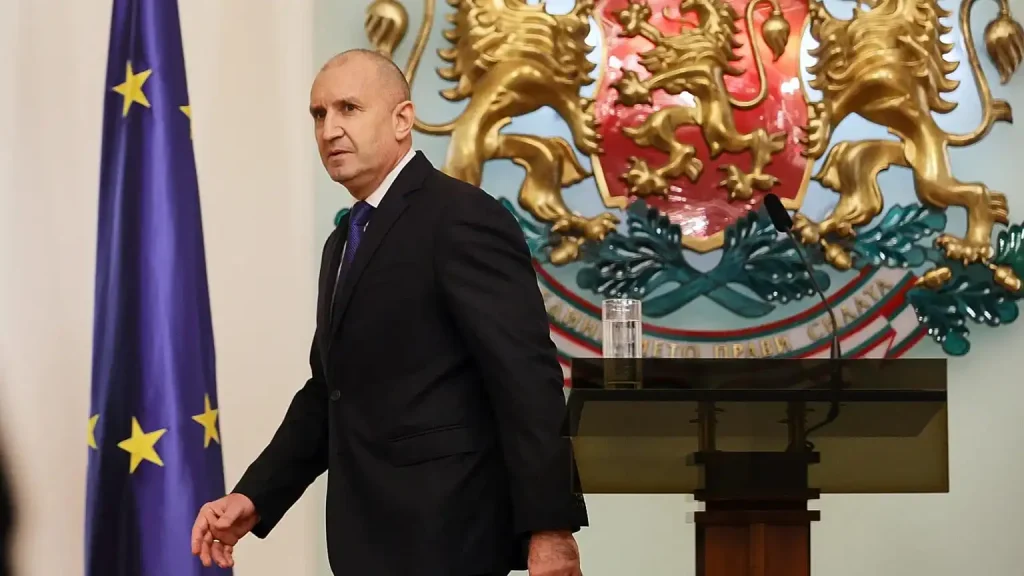
In a major shift for the Balkan political landscape, Bulgarian President Rumen Radev announced his resignation on Monday, January 19, 2026. This move confirms long-standing speculation that the former air force commander intends to launch a new political party. His goal is to contest the nation’s upcoming parliamentary elections following the collapse of the previous government.
Radev’s term was originally set to conclude in January 2027. However, he plans to formalize his exit by submitting his resignation to the Constitutional Court on Tuesday. Upon approval, Vice President Iliana Iotova will assume the presidency until new elections are held in November.
Addressing Persistent Political Gridlock
Bulgaria is currently trapped in a cycle of instability, facing its eighth parliamentary election in just four years. The previous administration resigned in December 2025, less than a year after taking office, due to public outcry over corruption and budget policies.
President Radev has been a vocal critic of the current leadership, famously stating:
“Today’s political class has betrayed Bulgarians’ hopes. We need a new public contract.”
By stepping down, Radev aims to transition from a largely ceremonial role to a position of active legislative influence. Analysts suggest he intends to position himself as a stabilizing force in a country defined by fragmented parliaments and failed coalitions.
The Political Profile of Rumen Radev
Since his first election in 2016 and re-election in 2021, Radev has established a controversial profile that often diverges from broader European Union norms.
Key defining stances include:
- Eurozone Skepticism: He has expressed significant doubt regarding Bulgaria’s recent adoption of the euro, which officially occurred on January 1, 2026.
- Geopolitical Alignment: He has maintained a “Kremlin-friendly” posture regarding the conflict in Ukraine. Specifically, he has frequently argued against sending military aid and described the war effort as “doomed.”
Electoral Outlook and Potential Challenges
While Radev remains a highly popular figure, experts believe he faces a difficult path to an outright legislative majority. Recent polling data indicates a complex landscape for any new political entity.
Projected Election Performance: Analysts predict a new party led by Radev could secure between 20% and 35% of the vote. This would likely necessitate a coalition with other groups, such as the reformist PP-DB party. However, such a partnership would face major ideological hurdles, particularly regarding Radev’s stance on the euro and military support for Ukraine.
The Road Ahead
The upcoming months will be a defining period for Bulgaria’s democratic future. As the country prepares for its eighth election since 2021, the emergence of a Radev-led party could either resolve the current deadlock or lead to further fragmentation. For now, the transition of power to Vice President Iotova remains the immediate focus of the Constitutional Court.
ALSO READ: Brussels Floats “Reversed” Ukraine EU Membership to Secure Peace Deal











 Armenian Dram
 Ghana Cedi
 Gambian Dalasi
 Guinea Franc
 Nigerian Naira
 CFA Franc BEAC