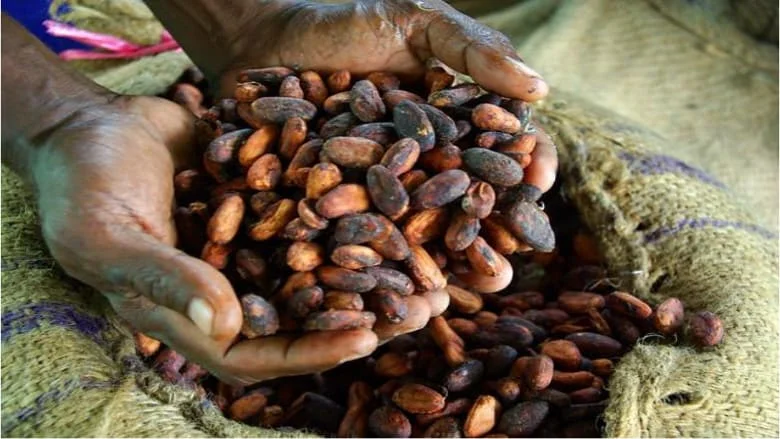
Ivory Coast, the world’s leading cocoa producer, is currently grappling with a severe economic deadlock. Since October of last year, a sharp decline in global market prices has led to a stagnation in exports, causing massive stock accumulations and leaving millions in financial limbo.
Nearly 20% of the Ivorian population depends on the cocoa industry for their livelihood. However, the current disparity between government-fixed rates and volatile global markets has pushed many rural families into extreme poverty.
The Human Cost of the Deadlock
The impact of the export slowdown is being felt most acutely at the grassroots level. According to Marty Somda, director of the Cabend cooperative, many producers are unable to afford basic necessities despite having valuable crops in storage.
“Producers are suffering from poverty even though they have products,” Somda stated. He recounted a recent tragedy involving a farmer who, despite owning cocoa estimated at 9 million francs, could not afford his wife’s funeral because he lacked liquidity.
Price Disparity and Desperate Sales
In Ivory Coast, the government regulates cocoa prices twice a year. However, these farm-gate prices often fail to align with the rapid shifts in the international market.
- Global Market Shift: Since mid-last year, international cocoa prices have dropped to approximately $5,000 per tonne ($5 per kilo).
- Official Farm-Gate Price: The government set the rate at 2,800 CFA francs per kilo.
- The Reality on the Ground: Due to an urgent need for cash, some farmers in regions like Duekoue are forced to sell their bags for as low as 2,000 francs per kilo just to survive.
Laurent Kone, a local farmer, highlighted the desperation of the community, noting that people are forced to accept “unaffordable” prices simply to save human lives and meet immediate medical or domestic needs.
Government Assurances Amid Uncertainty
Despite the buildup of unsold stocks, the Coffee and Cocoa Council is attempting to maintain calm among the workforce. Yves Brahima Kone, the council’s director, issued a statement aimed at reassuring the nation’s planters.
“We have made forecasts,” Kone explained. “All of the Ivory Coast’s production from our plantations will be purchased.”
While the government promises that all harvested cocoa will eventually find a buyer, the delay in these transactions continues to place a heavy burden on the farmers who fuel the nation’s most critical export industry.







 Armenian Dram
 Ghana Cedi
 Gambian Dalasi
 Guinea Franc
 Nigerian Naira
 CFA Franc BEAC