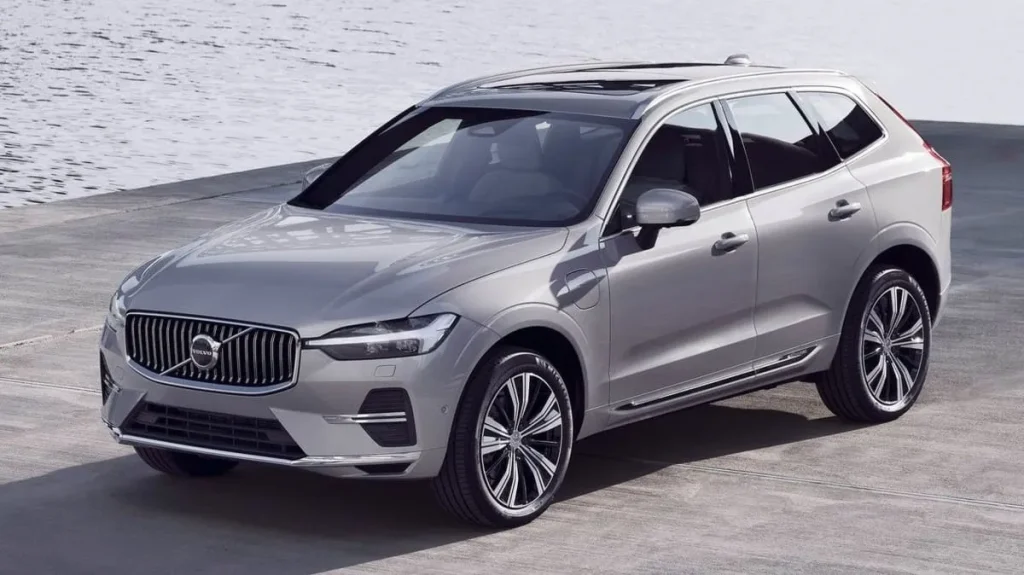
Volvo Cars officially launched its new mid-sized electric SUV, the EX60, on Wednesday. This launch signals a major push toward price equality between electric and hybrid models. Despite looming threats of U.S. tariffs linked to the Greenland dispute, the Swedish automaker remains confident in its international pricing strategy.
Achieving Price Parity
A primary goal for the EX60 is to bridge the cost gap that often discourages electric vehicle (EV) adoption. Currently, EVs typically cost 30% more than internal combustion counterparts. However, Volvo plans to launch the EX60 in Germany at €62,990. Consequently, this actually undercuts the best-selling XC60 plug-in hybrid, which is priced at approximately €67,990.
CEO Håkan Samuelsson confirmed that Volvo expects to maintain both price and margin parity between these models across all major markets. This includes the United States. He noted that since most large plug-in hybrids already face a 15% duty, the competitive landscape for the EX60 should remain stable.
Defying U.S. Trade Pressure
The launch occurs as U.S. President Donald Trump threatens to impose tariffs on several European nations. These threats, scheduled to start February 1, are tied to U.S. interests in Greenland. European leaders have already labeled this move as “blackmail.”
Because Volvo exports most of its U.S.-bound vehicles from its Gothenburg plant, the EX60 would be directly impacted by these tariffs. Nevertheless, Samuelsson dismissed the risk of production shifts based on digital rhetoric.
“New tariffs are not decided by a Truth Social media account,” Samuelsson told Reuters. “I have doubts something will come out of this.”
A Measured Global Rollout
The EX60 is scheduled to arrive in European showrooms this summer. Afterward, a U.S. release will follow later in 2026. Following a strategy similar to its sister brand, Polestar, Volvo will not initially release the EX60 in the highly competitive Chinese market.
While Volvo recently scaled back its timeline to become a fully electric brand, the company still views the EX60 as a critical volume driver. Currently, fully electric cars make up just over 20% of Volvo’s total sales.
Key Features for “Electric Doubters”:
- Charging Speed: Volvo promises “coffee-break length” charging times to reduce range anxiety.
- Competitive Pricing: The EV is positioned directly against popular hybrid alternatives.
- Strategic Range: The vehicle is engineered to compete in the high-volume mid-sized SUV segment.
As Volvo navigates a volatile geopolitical climate, the success of the EX60 will depend on its ability to convince buyers. Specifically, it must prove that electric luxury can be as affordable and convenient as traditional hybrid models.
READ ALSO: Netflix-Warner Merger: CEOs Defend $83B Bet Amid Backlash







 Armenian Dram
 Ghana Cedi
 Gambian Dalasi
 Guinea Franc
 Nigerian Naira
 CFA Franc BEAC