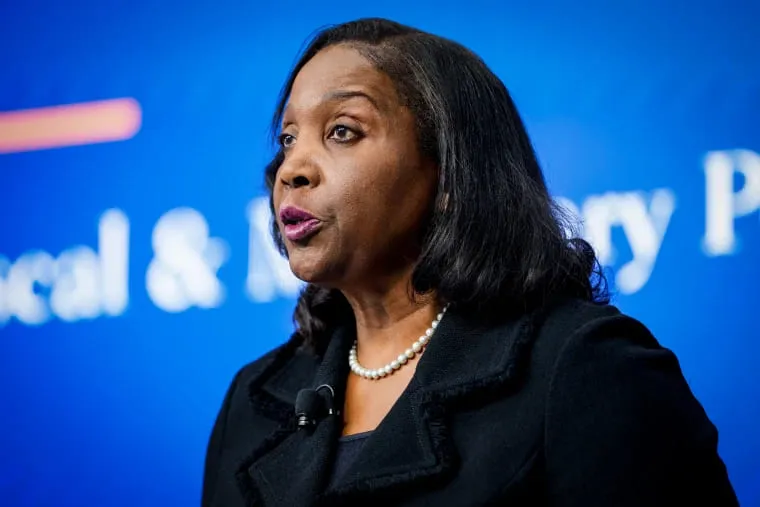
In a landmark hearing on Wednesday, January 21, 2026, the U.S. Supreme Court indicated it is unlikely to uphold President Donald Trump’s immediate firing of Federal Reserve Governor Lisa Cook.
This case, Trump v. Cook, is widely viewed as a critical test of the Federal Reserve’s independence. Additionally, it challenges the established limits of executive power.
A Conflict Over “For Cause” Removal
The two-hour oral argument focused primarily on whether the President met the legal “for cause” requirement needed to dismiss a sitting Fed governor. President Trump attempted to oust Cook in August 2025. Specifically, he cited unproven mortgage fraud allegations related to her conduct before she joined the board.
Solicitor General D. John Sauer, representing the administration, argued that “deceit or gross negligence” in financial matters justifies an immediate dismissal. However, both conservative and liberal justices questioned the lack of a formal hearing. They expressed concern that Cook was never given a fair opportunity to respond to these claims.
Key Concerns Raised by the Justices
During the hearing, several justices highlighted major legal and economic risks associated with the administration’s position:
- Lack of Due Process: Justice Amy Coney Barrett questioned why the administration denied Cook a hearing to defend herself. She noted that such a step would have significantly reduced “irreparable harm.”
- Fed Independence: Justice Brett Kavanaugh warned that allowing a firing without a clear process could “weaken, if not shatter, the independence of the Federal Reserve.”
- Economic Stability: Furthermore, Justice Barrett cited briefs from economists suggesting that Cook’s removal could trigger a recession. She asked the court to consider how to weigh this public interest against presidential authority.
The “Mortgage Fraud” Allegations
The administration’s case rests on claims that Cook misrepresented her primary residence on loan applications in 2021. In response, Cook’s attorney, Paul Clement, described the discrepancies as an “inadvertent mistake” regarding a vacation property. He argued that these actions do not constitute malfeasance in her current office.
Chief Justice John Roberts also appeared skeptical of the administration’s hardline stance. He questioned whether a single “inadvertent mistake” should result in the first-ever presidential firing of a central bank official.
Historical Context and Potential Impact
Since the Federal Reserve was established in 1913, no president has ever successfully removed a sitting governor. Cook was appointed by former President Joe Biden in 2022. Notably, she is the first Black woman to serve in the post and has been a consistent supporter of independent monetary policy.
Following the hearing, Cook released a statement emphasizing her commitment to the Fed’s mandate:
“This case is about whether the Federal Reserve will set key interest rates guided by evidence and independent judgment or will succumb to political pressure.”
What Happens Next?
Although the Supreme Court has previously allowed the Trump administration to remove heads of other agencies, it hinted that the Fed is different. Lawmakers have suggested the central bank possesses a “unique structure” that may require higher legal protection.
A final ruling in the case is expected by the end of June 2026. For now, a preliminary injunction remains in place. Consequently, Lisa Cook will continue her duties at the central bank while the legal process concludes.












 Armenian Dram
 Ghana Cedi
 Gambian Dalasi
 Guinea Franc
 Nigerian Naira
 CFA Franc BEAC