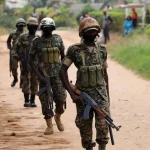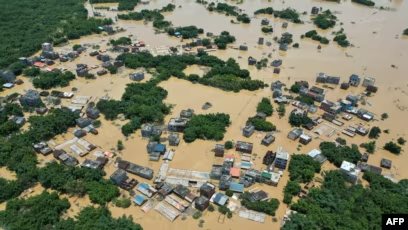
Heavy rains across Central and West Africa have caused the worst floods in decades. In Maiduguri, the capital of Borno state in Nigeria, residents are already facing big problems from an ongoing Islamic extremist insurgency. Now, they are also dealing with severe flooding.
This year, more than 1,000 people have died, and hundreds of thousands have lost their homes because of the floods. The worst-hit countries are Chad, Nigeria, Mali, and Niger.
The United Nations says over four million people have been affected by flooding in West Africa, which is three times more than last year.
Rescue operations are still going on, and the exact number of lives lost is unknown. So far, at least 230 people have died in Nigeria, 265 in Niger, 487 in Chad, and 55 in Mali. Mali is facing its worst floods since the 1960s.
Even though Africa contributes very little to global greenhouse gas emissions, it is highly vulnerable to extreme weather. The World Meteorological Organization says that sub-Saharan Africa will need $30-50 billion each year over the next decade to adapt to these weather events. By 2030, up to 118 million Africans may be affected by such extreme conditions.
In Borno state, Maiduguri has faced attacks from Boko Haram militants for more than a decade, and over 35,000 people have been killed. Now, the floods have added to the suffering.
Saleh Bukar, a 28-year-old from Maiduguri, shared how his neighbors woke him up at midnight shouting, “Water is flooding everywhere!” Many people, especially the elderly and disabled, couldn’t react in time. Sadly, some drowned before they could escape.
Over 600,000 people have been displaced in Borno state, and at least 100 have died. The floods also killed around 80% of the animals at Borno State Museum Park, and many reptiles escaped. The city’s main prison and police station were also damaged, leading to a prison break.
Ten days after the disaster, some areas of the city are returning to normal as the waters recede, but many survivors have shared heartbreaking stories of loss.
Aishatu Ba’agana, a mother of three, lost her newborn child to the floodwaters and hasn’t seen her family since she was rescued. The flood also destroyed key infrastructure, including two major dikes at a dam near Lake Alau. When the dam collapsed, 540 billion liters of water flooded Maiduguri, and important bridges were destroyed.
Governor Babagana Zulum has asked for international help, saying that local resources are stretched too thin to handle the crisis alone. The World Food Program has set up kitchens to feed those displaced, and USAID has given more than $3 million in aid to West and Central Africa, including $1 million for immediate relief.
In Niger, over 841,000 people have been affected, and many have lost their homes. Harira Adamou, a 50-year-old single mother, is now living in a temporary shelter after her mud hut was destroyed. She worries about more rains returning.
Currently, 15% of Maiduguri is still underwater. Nigerian authorities have warned that more floods may be coming due to continued rainfall.
Saleh Bukar, who lost his home, has not received much help from the government, except for some food. He has been helping others by rescuing people and cooking meals for those sheltering with him. He says, “I am volunteering to help, but I am also a victim. Our people need us. They need help.”
The West African countries most affected by the floods are:
- Chad
- Nigeria
- Mali
- Niger
The floods have caused widespread destruction across these countries, and the situation remains critical. Homes, farms, roads, and schools have been destroyed, leaving many communities in a desperate situation. With more rains predicted, the fear is that the worst may not be over yet.
In many areas, people are struggling to find food, clean water, and shelter. Disease outbreaks are also a concern due to the poor sanitation conditions caused by the floods. Stagnant water from the floods creates breeding grounds for mosquitoes, raising the risk of malaria and other waterborne diseases.
Local governments and international organizations are doing what they can to provide relief, but the scale of the disaster is overwhelming. In some places, aid is slow to reach, leaving people to rely on each other for survival. Communities have come together to support one another, sharing what little they have, and rescuing those trapped by the floodwaters.
Despite the challenges, there are stories of bravery and hope. Volunteers like Saleh Bukar continue to risk their lives to help others, offering a sense of solidarity in the face of unimaginable hardship. Their efforts remind us that even in the darkest of times, humanity’s resilience can shine through.
Governments across the affected regions are calling for more international support, not only to respond to this disaster but also to help prepare for future climate-related events. Experts are warning that without serious efforts to adapt to the changing climate, floods like this may become more frequent and more severe in the years to come.
The affected West African countries are already dealing with other crises, such as poverty, conflict, and food insecurity, which makes recovery even more difficult. Long-term solutions are needed, including better infrastructure to protect against floods and stronger early warning systems to give people more time to evacuate.
For now, the focus is on providing immediate relief to those affected and trying to rebuild the communities devastated by the floods.
But the lessons from this disaster are clear: Africa, though contributing little to global emissions, is bearing the brunt of climate change. More needs to be done to support the region in adapting to the challenges ahead.
As the rains continue, the people of West Africa are doing their best to survive and rebuild. But they cannot do it alone. The world must pay attention and step up to help in this time of need.



 Armenian Dram
 Ghana Cedi
 Gambian Dalasi
 Guinea Franc
 Nigerian Naira
 CFA Franc BEAC