Kenyan police have arrested Festus Arasa Omwamba, 33, over allegations that he was part of a human trafficking network luring Kenyans to Russia with false promises of employment, only for them to be sent to fight on the front lines in Ukraine.
The suspect is being held in Moyale, a northern town on the Ethiopia border, and is preparing for his impending court appearance, officials said in a statement on Wednesday. According to the Directorate of Criminal Investigations.
The arrest follows a recent report from Kenya’s National Intelligence Service, which indicated that over 1,000 Kenyans have been recruited to fight in the Russia-Ukraine conflict, with 89 on the front line, 39 hospitalized, and 28 missing in action.
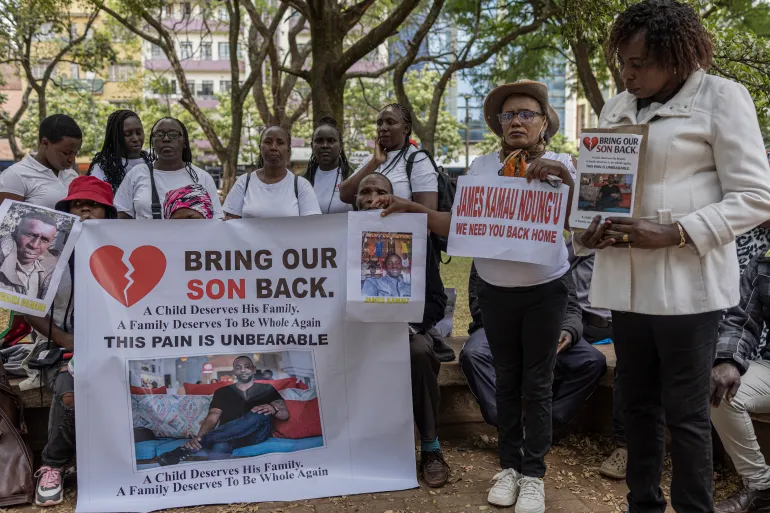
The report sparked protests in Nairobi, with families demanding government action against the syndicate and officials complicit in the recruitment network. Many families are still awaiting news of their relatives, while others mourn the loss of loved ones.
The Russian Federation embassy in Nairobi has denied the allegations, calling them “misleading propaganda,” and stated it never issued visas to Kenyans intending to fight in Ukraine. The embassy noted, however, that foreign citizens are allowed to voluntarily enlist in Russia’s armed forces.
Kenya’s Foreign Minister Musalia Mudavadi said he plans to travel to Russia in March to engage authorities and secure the safe return of Kenyans believed to be stranded there.
Fraudulent Recruitment of African Fighters
Similar reports of Africans being tricked into fighting in Ukraine have emerged from South Africa, Zimbabwe, and other nations. On Wednesday, Ukrainian Foreign Minister Andrii Sybiha accused Russia of deceiving more than 1,700 African recruits into joining its war effort, as the conflict enters its fifth year.
Sybiha made the statement in Kyiv during a news conference with visiting Ghanaian MP Samuel Okudzeto Ablakwa.
A day earlier, South Africa announced that 11 of its nationals, reportedly “lured” into fighting for Russia, had been repatriated, adding to four others who had already returned home.
This incident highlights growing concerns over human trafficking networks exploiting vulnerable Africans under the guise of foreign employment, often placing them in life-threatening situations abroad.







 Armenian Dram
 Ghana Cedi
 Gambian Dalasi
 Guinea Franc
 Nigerian Naira
 CFA Franc BEAC