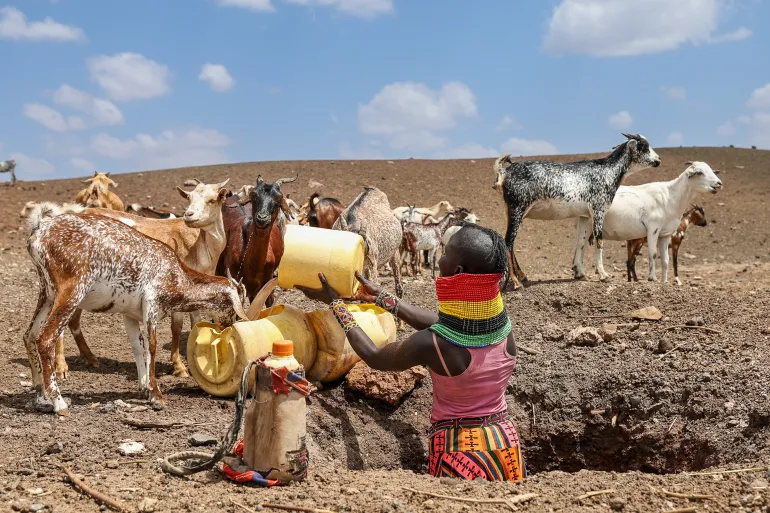
More than two million people in Kenya are grappling with acute hunger as a prolonged and devastating drought tightens its grip on large parts of the country, particularly in the arid and semi-arid northeast, the United Nations has warned.
According to UN officials, pastoral communities near Kenya’s border with Somalia have been hardest hit, with widespread livestock deaths compounding food shortages and malnutrition. Images of emaciated cattle and dried-up water sources in the region have drawn fresh attention to the growing impact of climate change on livelihoods dependent on rain-fed agriculture.
The current crisis mirrors the 2020–2023 drought that ravaged the Horn of Africa, killing millions of livestock across Kenya, Ethiopia, and Somalia. Although a full-scale famine in Somalia was narrowly avoided at the time due to international aid, conditions across the region are again deteriorating.
The Horn of Africa has now endured four consecutive failed rainy seasons. The most recent October-to-December wet season ranked among the driest on record, with eastern Kenya experiencing its worst drought for that period since 1981, according to UN health agencies.
Kenya’s National Drought Management Authority has confirmed drought conditions in at least 10 counties. Mandera County, located along the Somali border, has been classified at “alarm” level, with severe water shortages driving livestock deaths and a sharp rise in child malnutrition.
The crisis extends beyond Kenya. The World Health Organization reports similar drought-driven emergencies in Somalia, Tanzania, and Uganda. In southern Somalia, humanitarian group Islamic Relief described “shocking food shortages” as families flee worsening conditions. More than three million Somalis have been displaced, many to overcrowded camps where the majority survive on one meal or less per day, while children show visible signs of malnutrition and wasting.
Experts say climate change is a key driver of the worsening situation. Rising temperatures and the warming of the Indian Ocean have intensified extreme weather patterns, leading to longer, harsher droughts and more destructive storms. For communities reliant on livestock and subsistence farming, the impact has been devastating, with pastures destroyed and crops failing.
Africa remains particularly vulnerable due to limited disaster preparedness and response infrastructure. Despite contributing only about 3 to 4 percent of global greenhouse gas emissions, the continent continues to bear a disproportionate share of the impacts of climate change.
Humanitarian agencies have renewed calls for urgent assistance, warning that without swift intervention, hunger, displacement, and malnutrition will continue to escalate across Kenya and the wider Horn of Africa.









 Armenian Dram
 Ghana Cedi
 Gambian Dalasi
 Guinea Franc
 Nigerian Naira
 CFA Franc BEAC