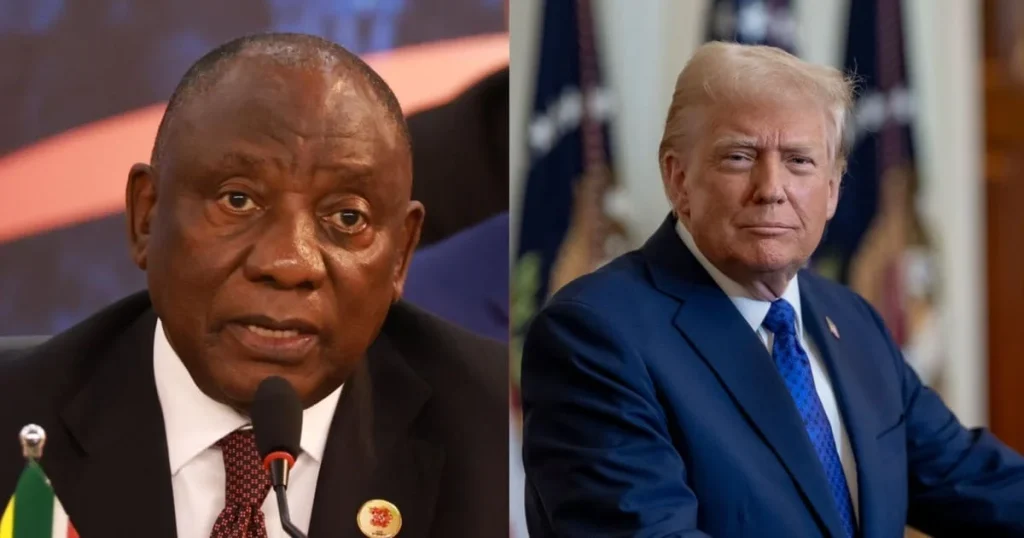
A major diplomatic rift has emerged between the United States and South Africa. This follows a tense incident involving the detention of personnel in Johannesburg.
Washington has issued a stern warning of “severe consequences.” This threat stands if South Africa fails to address the treatment of U.S. officials and the alleged leaking of their personal data.
The dispute centers on a police operation conducted on Tuesday, December 16, 2025. Consequently, relations between the two nations have hit a historic low.
Conflicting Accounts of the Incident
The U.S. State Department claims that authorities briefly detained two American officials. These individuals were reportedly performing official duties. Specifically, Washington says they were providing humanitarian support to the Afrikaner minority group.
The U.S. government condemned the event in a strongly worded statement:
“This can only be seen as an attempt to intimidate U.S. government personnel… The United States will not tolerate such behavior toward its government’s officials.”
Furthermore, Washington alleged that South African authorities released the officials’ passport information publicly. They claim this practice, known as doxxing, puts the officials in immediate danger.
South Africa’s Defense
South African authorities have denied arresting any U.S. government personnel. On Wednesday, the Ministry of Home Affairs clarified the situation. They described the operation as a routine immigration enforcement action at a processing center in Johannesburg.
The South African government reported the following:
- Arrests Made: Police arrested seven Kenyan nationals during the raid.
- Visa Violations: These individuals were allegedly working illegally on tourist visas to process U.S. immigration applications.
- Jurisdiction: The ministry emphasized that the site was not a diplomatic facility. Therefore, they maintain no U.S. officials were taken into custody.
Context: The Afrikaner Refugee Program
The tension stems from a controversial U.S. resettlement program. Introduced earlier this year, the program prioritizes white South Africans for refugee status. It is based on claims of racial persecution and “genocide.” However, the South African government firmly rejects these allegations.
The year 2025 has seen a steady rise in friction. It began in February when a U.S. Executive Order halted aid to South Africa. By March, Pretoria’s Ambassador to the U.S. was expelled. These tensions peaked in November when the U.S. boycotted the G20 summit held in South Africa.
The South African Department of International Relations and Cooperation (DIRCO) has now initiated formal talks. They are meeting with both the United States and Kenya to resolve the matter. However, South Africa maintains it will not negotiate its sovereignty or the rule of law.
What do you think? Should international resettlement programs focus on specific minority groups, or should aid be universal? Share your thoughts in the comments below!




 Armenian Dram
 Ghana Cedi
 Gambian Dalasi
 Guinea Franc
 Nigerian Naira
 CFA Franc BEAC