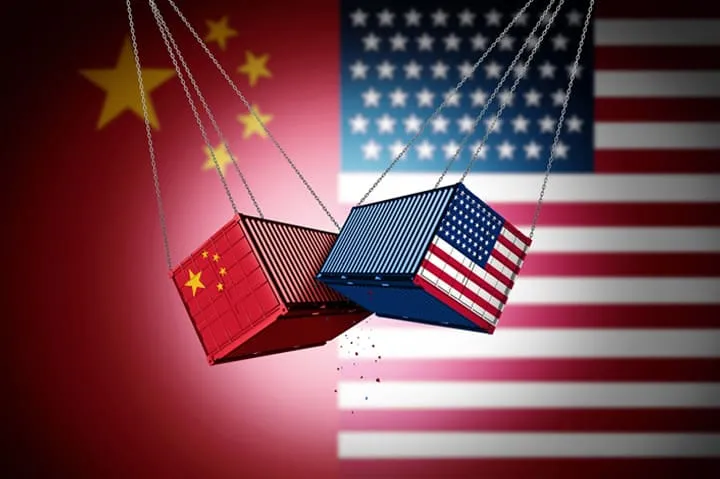
President Daniel Noboa announced on Wednesday that Ecuador will implement a 30% tariff on all goods imported from Colombia starting February 1. The move signals a sharp escalation in regional tensions, with Noboa citing a significant trade deficit and a perceived lack of cooperation from Bogotá in combating cross-border organized crime.
In a statement shared on X, Noboa emphasized that the financial penalty will remain in effect until Colombia demonstrates a “real commitment” to joint operations against drug trafficking and illegal mining. “Ecuador is fighting a complete war against evil and narco-terrorism,” Noboa stated during the World Economic Forum in Davos earlier this week.
Security and the “Narco-Dictator” Context
The tariff announcement comes at a time of high volatility in Latin American geopolitics. Following the dramatic U.S. intervention in Caracas and the capture of Nicolas Maduro—whom Washington labeled a “narco-dictator”—the United States has signaled potential pressure on both Colombia and Mexico regarding organized crime.
Noboa has made national security the cornerstone of his presidency. He recently deployed over 10,000 soldiers to Ecuador’s most violent provinces and militarized the border city of San Lorenzo to quell clashes between rival criminal groups.
Economic Fallout and Trade Deficits
Beyond security concerns, Ecuador is grappling with a lopsided economic relationship with its larger neighbor. According to Ecuador’s central bank, the nation faced a trade deficit exceeding $838 million in the first ten months of last year alone. Noboa projects the annual deficit will surpass $1 billion.
Ecuador’s dependency on Colombian imports includes:
- Electrical Power: Critical for stabilizing the grid during droughts.
- Medicines: A staple of the cross-border pharmaceutical trade.
- Agricultural Supplies: Including essential pesticides.
While Ecuador is Colombia’s sixth-largest export destination, this new 30% tariff follows a similar 27% tariff imposed on Mexican goods earlier this year.
Diplomatic Friction: The Case of Jorge Glas
Tensions have been further strained by the imprisonment of former Vice President Jorge Glas. Recently, Colombian President Gustavo Petro sparked controversy by sharing an image of Glas in prison, claiming the politician showed signs of “psychological torture” and should be released.
Ecuadorian officials have dismissed these claims, maintaining that Glas is serving a lawful sentence for corruption. However, the diplomatic row over Glas, who holds dual Colombian and Ecuadorian citizenship, continues to complicate negotiations over border security and trade.
Colombia’s Response
While Colombia’s trade and foreign ministries are currently reviewing the measure, the defense ministry highlighted a recent joint operation that successfully seized a marijuana shipment at the border. Despite this, Noboa remains firm that current efforts are insufficient to protect Ecuadorian interests.
As the February 1 deadline approaches, many fear the tariff will drive up costs for Ecuadorian consumers, particularly for essential medicines and energy, while further isolating Colombia within the Andean trade bloc.






 Armenian Dram
 Ghana Cedi
 Gambian Dalasi
 Guinea Franc
 Nigerian Naira
 CFA Franc BEAC