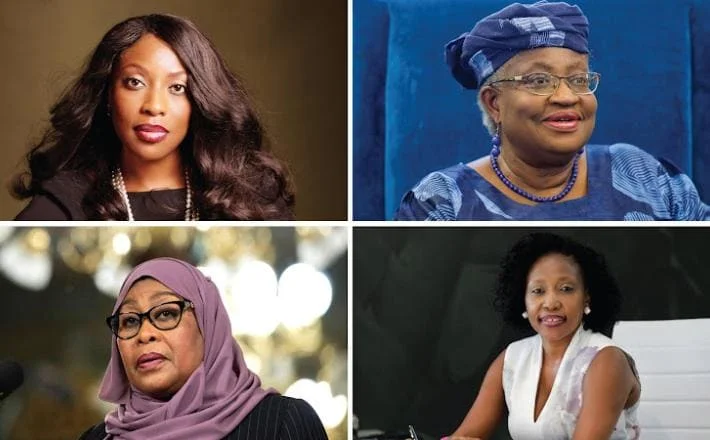
Forbes has unveiled its 2025 list of the world’s 100 most powerful women. The ranking highlights leaders who are shattering glass ceilings, even as the global landscape for women becomes increasingly difficult.
This recognition comes amidst sobering statistics. In the United States alone, nearly 500,000 women left the workforce between January and October 2025. This marks one of the sharpest declines on record.
Corporate commitment to gender equity also appears to be waning. Research by McKinsey and Lean In reveals a stark drop. Only 54% of companies now prioritize promoting women into leadership roles, down from 90% just four years ago.
Additionally, the UN has flagged a concerning rise in online sexism targeting women across all industries.
Against this challenging backdrop, six African women stand out. They have achieved historic milestones in politics, business, and media.
Mary Vilakazi (South Africa)
CEO, FirstRand Group
Mary Vilakazi continues to break new ground in finance. She is a chartered accountant who started her career at PwC, becoming one of its youngest partners at age 27.
She joined FirstRand in 2018 as Group COO. On April 1, 2024, she made history. Vilakazi became the first woman and first Black woman to lead FirstRand Group, South Africa’s largest financial services firm by market value.
Judith Suminwa Tuluka (DRC)
Prime Minister, Democratic Republic of Congo
In June 2024, Judith Suminwa Tuluka achieved a major political milestone. She became the first woman to hold the office of Prime Minister in the Democratic Republic of Congo.
Tuluka is an economist and former official at the United Nations Development Programme (UNDP). She previously served as the Minister of State and Planning. Her tenure is defined by deep expertise in public finance and national coordination.
Netumbo Nandi-Ndaitwah (Namibia)
President of Namibia
Netumbo Nandi-Ndaitwah was sworn in as Namibia’s first female president on March 21, 2025.
She is a veteran of the country’s political landscape. Nandi-Ndaitwah previously served as Vice President and held critical ministerial portfolios in foreign affairs and the environment. Since taking office, her administration has focused on strengthening national policies and reducing the country’s debt.
Mpumi Madisa (South Africa)
CEO, Bidvest
Mpumi Madisa holds a unique distinction. She is the first Black woman to lead a top-40 company listed on the Johannesburg Stock Exchange.
Madisa became CEO of Bidvest in October 2020. She rose through the corporate ladder in sales, marketing, and corporate affairs roles. Under her leadership, the conglomerate has expanded globally and restored profitability. She currently manages around 130,000 employees.
Ngozi Okonjo-Iweala (Nigeria)
Director-General, World Trade Organization
Ngozi Okonjo-Iweala is renowned globally as a top economist. She continues to wield significant influence on the world stage.
She became the first woman and first African to lead the World Trade Organization (WTO) in March 2021. In 2024, she was reappointed for a second term. This move solidified her role in global trade governance.
Mo Abudu (Nigeria)
Founder, EbonyLife Media
Media mogul Mo Abudu is reshaping how African stories are told. TIME Magazine named her one of the “100 Most Influential People in the World” in 2025.
Abudu recently launched the Afro Film Fund. This US$50 million initiative aims to finance African-origin films and series. She has also expanded her brand internationally with the opening of EbonyLife Place London.
MORE: Famine and Genocide Fears Mount After Fall of El-Fasher



 Armenian Dram
 Ghana Cedi
 Gambian Dalasi
 Guinea Franc
 Nigerian Naira
 CFA Franc BEAC