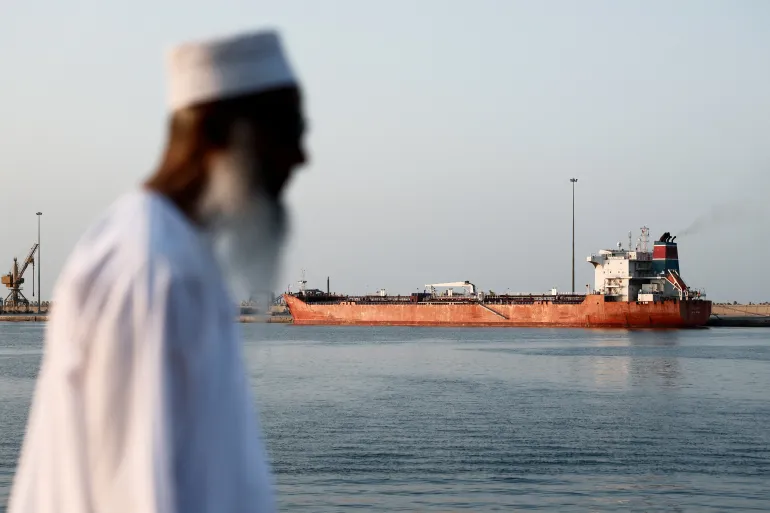
Iran has tightened its grip on the strategic Strait of Hormuz, introducing a controversial system that effectively controls which vessels can pass through one of the world’s most critical energy corridors.
The move, triggered by the ongoing conflict involving the United States and Israel, has disrupted nearly 20% of global oil and gas supplies, pushing energy markets into turmoil and raising fears of a global recession.
Shipping Bottleneck Deepens
The narrow waterway—bordered by Iran to the north and Oman and United Arab Emirates to the south—has become a choke point, with nearly 2,000 vessels stranded as access tightens.
Analysts say many shipping operators are now delaying journeys rather than risk rerouting or being denied passage, further compounding supply chain disruptions.
Inside Iran’s ‘Tollbooth’ System
Even before formal legislation is passed, Iran’s powerful Islamic Revolutionary Guard Corps (IRGC) has implemented a strict vetting and clearance process for ships seeking to transit the strait.
Under the system:
- Ship operators must submit detailed vessel and crew information through intermediaries
- The IRGC reviews and approves (or rejects) applications
- Approved ships receive a clearance code and designated route
- Iranian patrol boats may escort vessels through territorial waters
Ships that fail to comply are denied entry, with some already turned back for lacking proper authorisation.
Price of Passage
Reports suggest that some vessels are being charged up to $2 million per transit, although the exact pricing structure remains unclear.
Iran has indicated that only “non-hostile” countries may benefit from safe passage—effectively creating a selective access system based on geopolitical alignment. Ships from nations such as China, India, Malaysia, Egypt, and South Korea have reportedly been allowed through.
Oil Prices Surge, Economies Strain
The disruption has already sent global oil prices soaring above $100 per barrel, forcing several countries—especially in Asia—to ration fuel and scale back industrial production.
Experts warn that prolonged restrictions could:
- Trigger a global energy crisis
- Disrupt supply chains worldwide
- Push fragile economies toward recession
Legal Grey Zone
The situation has sparked intense legal debate. Under the United Nations Convention on the Law of the Sea (UNCLOS), ships are guaranteed the right of transit passage through international straits.
However, Iran argues it retains authority over its territorial waters and has not fully ratified the convention—creating a legal grey area.
Maritime experts say while Iran may justify inspections under self-defence during wartime, charging tolls and restricting passage could amount to unlawful economic warfare.
High-Stakes Geopolitics
Tehran has reportedly made recognition of its authority over the strait one of its conditions for ending the conflict, turning the waterway into a powerful geopolitical bargaining chip.
With tensions still high and global markets on edge, the Strait of Hormuz has once again become the focal point of a crisis that could reshape energy security and international trade for years to come.











 Armenian Dram
 Ghana Cedi
 Gambian Dalasi
 Guinea Franc
 Nigerian Naira
 CFA Franc BEAC