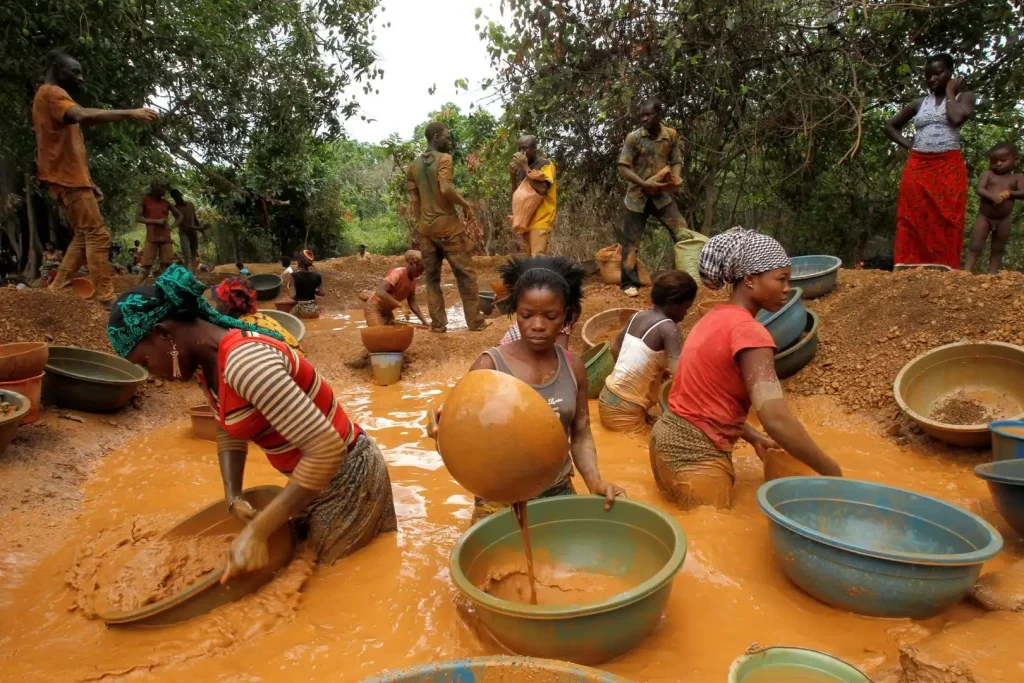
Gold mining companies in Ivory Coast have started paying a contentious new 8% royalty on their revenue.
These payments are being backdated to January, ending a months-long standoff over the tax hike’s legality.
This development is a significant victory for the Ivorian government. As the world’s top cocoa producer, the nation is actively seeking to diversify its income beyond agriculture. The new flat 8% rate replaces a previous sliding scale that varied based on specific contract terms.
The Dispute
Initially, mining operators refused to comply with the new levy. They argued that their contracts included “stability clauses” designed to protect them from sudden fiscal changes. Consequently, they claimed the hike was unlawful.
The companies launched negotiations hoping to scrap the royalty. However, the government refused to budge.
According to industry insiders, the miners have finally conceded.
“Everyone has now agreed to pay – the question is whether penalties apply,” said one executive. He noted that firms are now rushing to settle their accounts to avoid potential fines.
High Prices Soften the Blow
The tax increase represents a significant cost for operators. However, a historic rally in commodity markets has mitigated the financial pain. Gold prices have surged roughly 65% this year, keeping profit margins healthy despite the higher state take.
David Whittle, Chief Operating Officer for West Africa at Fortuna Mining, confirmed his company has complied.
“We’ve made our payments of 8%, backdated from when it was introduced,” Whittle stated. “We didn’t see negotiations heading anywhere. The gold price has taken care of it.”
Major players in the Ivorian gold sector include Perseus Mining, Endeavour Mining, Allied Gold, and new entrants like Montage Gold.
A Regional Trend
The situation in Ivory Coast reflects a wider trend across West Africa. Governments throughout the region are tightening fiscal terms to capture a larger share of resource wealth.
The specific approach varies by country:
- Legislative Reforms: Nations like Ghana and Ivory Coast are using new laws and revised levies to boost state revenue legally.
- Direct Intervention: In contrast, military-led governments in Mali, Niger, Burkina Faso, and Guinea have taken drastic steps. These include seizing assets and revoking licenses to force concessions.
Operators warn that while current high prices make these costs manageable, this aggressive fiscal environment could eventually discourage future investment in the region.
ALSO READ: Australia Vows Stricter Gun Laws After Bondi Massacre







 Armenian Dram
 Ghana Cedi
 Gambian Dalasi
 Guinea Franc
 Nigerian Naira
 CFA Franc BEAC