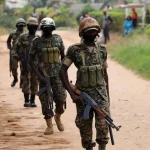
The major $20 billion liquefied natural gas (LNG) project on Mozambique’s coast is back online. This resumption, however, has isolated the local population, fueling local anger.
The large energy company lifted the force majeure, a declaration of unavoidable circumstance—on the project in October. This move is expected to eventually make Mozambique one of the world’s top 10 gas exporters.
Locals Cut Off by “Fortress” Model
Locals in Palma, the town nearest the facility, had invested heavily after the project began years ago. They built hotels, offered transport, and started catering businesses, hoping to benefit from the massive investment. When the project was suspended in 2021 due to militant attacks, those hopes were dashed.
Now that work has resumed at the facility, the company has switched to a “containment mode.”Workers are flown in, and supplies arrive mostly by sea. The site, on the Afungi peninsula, operates like a “fortress,” accessible only by air or water.
Local businesses are suffering. Fernando Cuna, a hotel manager, said Palma has become a “desert.” His hotel is empty, and local drivers wait without clients. This isolation model is widely feared to be fueling resentment toward the government and the Western developers, potentially worsening the local insurgency.
Security and Financial Tensions
The project’s restart comes even as attacks against civilians have surged in the northern province of Cabo Delgado. Analysts suggest the containment model sends the wrong message: that the government prioritizes resource exploitation over civilian well-being.
The government must still approve the company’s new budget and schedule, which estimates production starting in 2029. The energy company wants the development period extended by 10 years to compensate for the $4.5 billion in frozen costs.
However, Mozambique needs gas revenue immediately. Since initial profits will go toward repaying project costs, the nation won’t see significant income for at least a decade. The government is resisting any budget increases that would further delay that crucial revenue stream.




 Armenian Dram
 Ghana Cedi
 Gambian Dalasi
 Guinea Franc
 Nigerian Naira
 CFA Franc BEAC