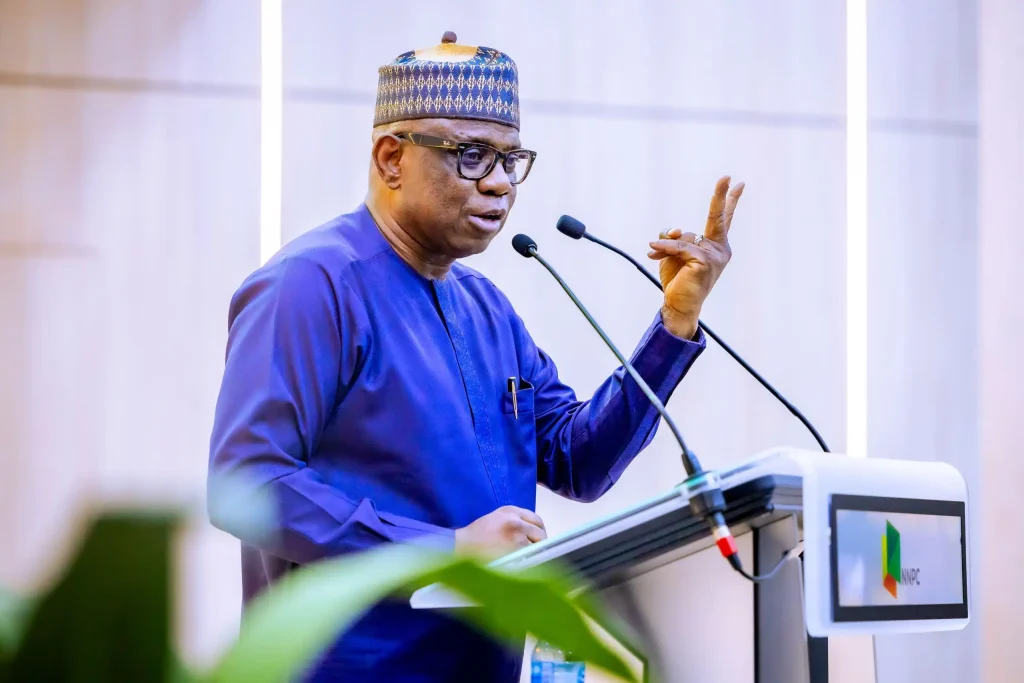
On September 29, 2025, NNPCL CEO Bashir Ojulari reported major losses from a three-day PENGASSAN strike.
The action, targeting Dangote Refinery, cut oil production by 16%, marketed gas by 30%, and power supply by 20%.
Heavy Losses
Ojulari’s letter to regulators detailed 283,000 barrels of oil and 1.7 billion cubic feet of gas lost daily. Over 1,200 megawatts of power were affected.
Starting September 28, the strike shut down key oil terminals and gas plants, hitting Nigeria’s energy revenue hard.
Temporary Truce
PENGASSAN paused the strike on October 1 after government talks. Union leader Festus Osifo called the truce temporary, warning of resumption if issues remain unresolved.
Root of Conflict
The union accused Dangote Refinery of firing and transferring unionized workers, replacing some with foreigners.
The refinery denied targeting unions, citing operational needs. The dispute disrupted crude and gas supplies, raising economic alarms.
Government Steps In
Fearing energy security risks, the government mediated talks. The Labour Ministry oversaw an agreement, but PENGASSAN criticized its unclear terms. They suspended action to respect the process.
Union’s Position
Osifo stressed the strike was about workers’ rights to unionize and fair pay, not dues.
“We fight for better conditions, not to harm Dangote’s $20 billion investment,” he said, dismissing sabotage claims.
Industry Role
PENGASSAN supports firms like Shell and Chevron, which invested $200 billion in Nigeria. The union says it protects workers in an industry vital to 90% of Nigeria’s foreign exchange.
Why It Matters
The strike reveals weaknesses in Nigeria’s energy sector and labor tensions at Dangote Refinery, critical for economic stability.
Next Steps
In October 2025, NNPCL and PENGASSAN will track the agreement’s progress. The union vows to act fast if Dangote fails to comply.




 Armenian Dram
 Ghana Cedi
 Gambian Dalasi
 Guinea Franc
 Nigerian Naira
 CFA Franc BEAC