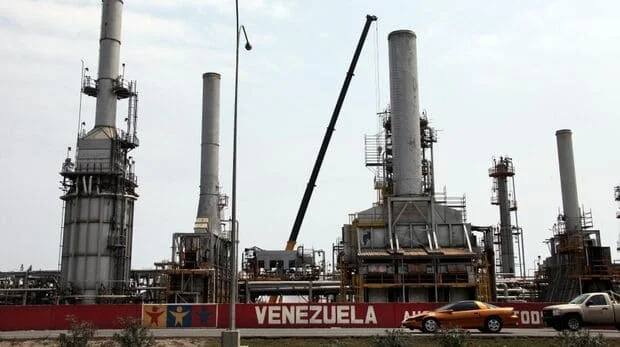
Global oil prices climbed by approximately $1 per barrel on Monday as energy traders analyzed the potential disruption to crude flows from Venezuela. Following the apprehension of President Nicolás Maduro by U.S. forces, the market remains volatile while assessing the future of the nation holding the world’s largest oil reserves.
Market Benchmarks and Pricing
By the close of Monday’s session, the two major global benchmarks showed significant gains:
- Brent Crude: Rose by $1.01 (1.66%) to settle at $61.76 per barrel.
- West Texas Intermediate (WTI): Increased by $1.00 (1.74%) to end at $58.32.
The session was characterized by sharp fluctuations, with prices initially dropping before rallying as investors processed the news that Washington intends to take administrative control of the OPEC member state.
Uncertainty Surrounding Production and Corporate Strategy
A primary concern for the energy sector is how U.S. oversight will alter current export volumes. While Venezuela’s production has suffered for decades due to lack of investment and infrastructure mismanagement, it still accounts for roughly 1% of global output, averaging 1 million barrels per day last year.
Industry insiders report that the Trump administration did not consult major oil players like Exxon Mobil, ConocoPhillips, or Chevron prior to the military operation. While meetings are scheduled for later this week, analysts suggest that only firms with an existing presence in the region, such as Chevron, may be willing to commit to resource development in the near term.
The End of the Blockade?
Venezuela’s acting leadership has expressed a willingness to cooperate with the United States. Many experts anticipate a sequence of events that could stabilize the market:
-
Lifting of Naval Blockades: Ending the military standoff at sea.
-
Sanctions Relief: Allowing oil currently held in storage or on tankers to enter the global market.
-
Infrastructure Recovery: A long-term effort to rebuild the country’s depleted production capacity.
Despite the current U.S. embargo, several tankers have reportedly departed Venezuelan waters since the start of 2026, defying the existing blockade.
Expanding Geopolitical Risks
The market is also reacting to broader regional instability. President Trump has hinted at potential military interventions in Colombia and Mexico to address drug trafficking concerns. Furthermore, traders are closely monitoring Iran, where threats of U.S. intervention in domestic protests could further destabilize OPEC production.
While these geopolitical risks rise, the broader OPEC+ alliance has opted to maintain its current production levels, leaving the market to focus primarily on the fallout in the Western Hemisphere.





 Armenian Dram
 Ghana Cedi
 Gambian Dalasi
 Guinea Franc
 Nigerian Naira
 CFA Franc BEAC