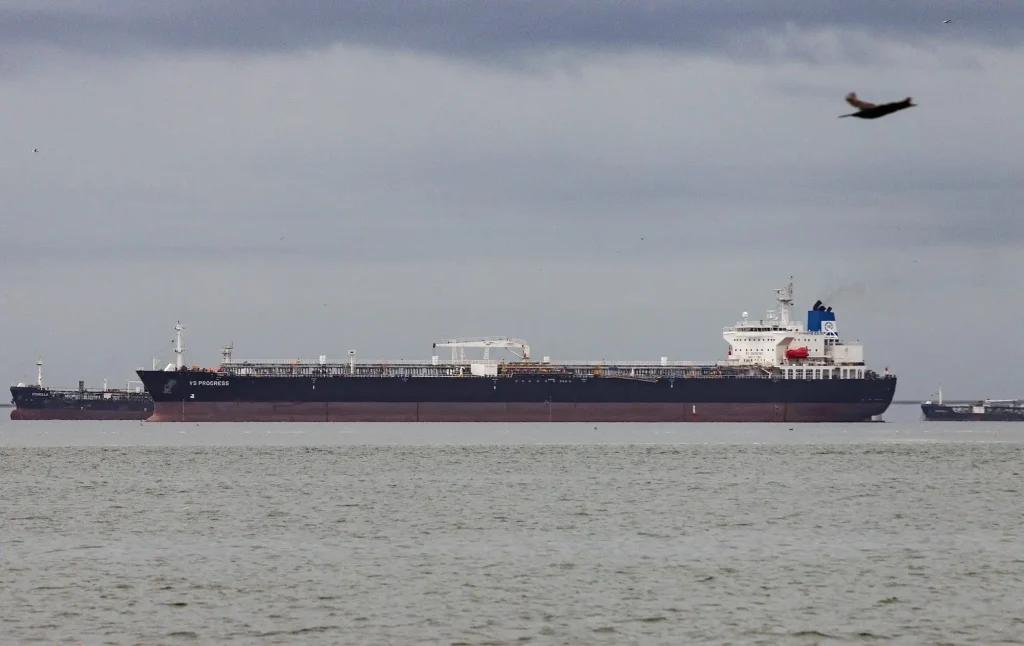
Loading activities at Venezuelan oil terminals have ground to a near-halt as of Monday, December 22, 2025. This disruption follows a dual crisis: a tightening U.S. maritime blockade and a major cyberattack on state-run energy giant PDVSA.
Consequently, shipping data shows that most active tankers are now restricted to moving oil only between domestic ports.
This massive slowdown occurs after the U.S. Coast Guard recently seized a second supertanker and launched an “active pursuit” of a third vessel linked to Venezuelan trade.
U.S. Maritime Blockade Escalates
The recent disruptions are part of an aggressive “pressure campaign” by the U.S. administration. Last week, President Donald Trump declared a “total and complete blockade” on all sanctioned oil tankers entering or leaving Venezuela.
Recent Maritime Developments:
- Seizure of the Centuries: U.S. forces boarded this Panama-flagged supertanker on Saturday. It was reportedly carrying 1.8 million barrels of crude bound for China.
- Pursuit of the Bella 1: On Sunday, officials confirmed the Coast Guard is in “active pursuit” of this sanctioned vessel in the Caribbean.
- Price Impact: Brent crude futures rose 2.17% to $61.78 per barrel on Monday. Similarly, U.S. WTI climbed to $57.77 as markets react to the supply threat.
PDVSA Struggles with System Failures
Internally, PDVSA is also grappling with a massive cyberattack that hit its administrative systems last week. While the company claims the attack has been “neutralized,” sources report that key systems for managing export and import data remain offline.
Internal Operational Challenges:
- Manual Records: Port workers are currently forced to keep written logs as centralized systems remain down.
- Stuck Cargo: Millions of barrels of oil are stuck on loaded vessels. Shippers are currently refusing to sail due to the high risk of interception.
- Financial Delays: The system outage has reportedly delayed salary payments for many PDVSA employees.
International Tensions and Continued Trade
The Venezuelan government has labeled the U.S. actions as “acts of piracy” and a violation of international law. China’s Foreign Ministry also criticized the recent seizures, calling them a serious breach of maritime sovereignty.
Despite the broader blockade, some authorized trade continues. Chevron, which operates under a specific U.S. license, successfully exported a 500,000-barrel cargo on Sunday. Oil Minister Delcy Rodriguez confirmed that deliveries to the U.S. partner remain uninterrupted for now.
READ ALSO: Albanese Vows Action on Hate Speech at Bondi Victim’s Funeral





 Armenian Dram
 Ghana Cedi
 Gambian Dalasi
 Guinea Franc
 Nigerian Naira
 CFA Franc BEAC