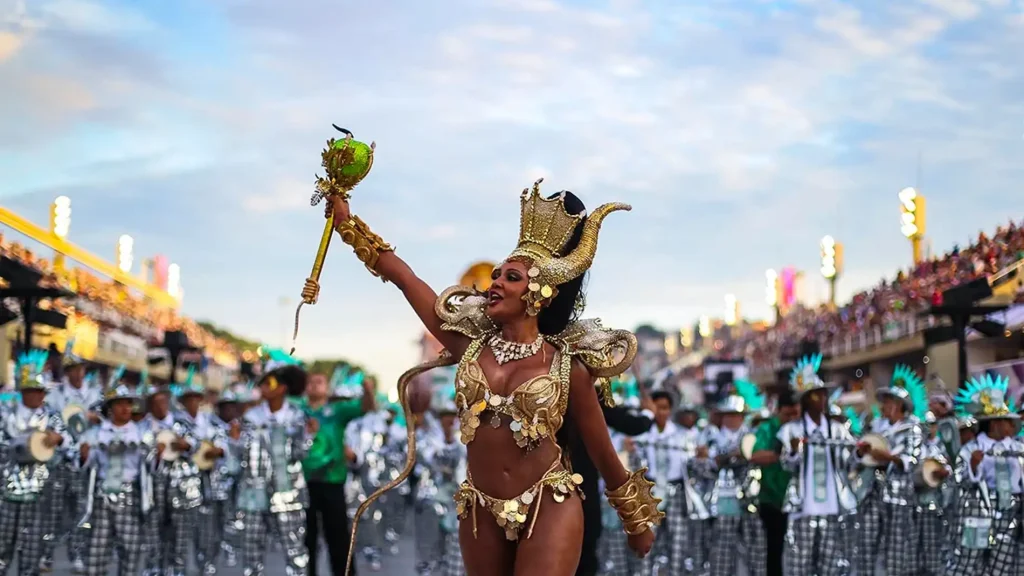
The rhythms of samba filled the air above Rio de Janeiro this week. Artists boarded the famous Corcovado Train for a unique celebration.
For the occasion, the classic tourist train transformed into the vibrant “Samba Train.” It carried guests from Cosme Velho Station to a special thanksgiving mass at the feet of the Christ the Redeemer statue.
This journey served as a prelude to the ceremony. At the summit, the sacred and the celebratory converged to mark National Samba Day.
Faith and Folklore Unite
During the mass, the separation between the sanctuary and the samba schools dissolved. Father Omar Raposo, rector of the Christ the Redeemer Sanctuary, led the service. He shared the altar with performers from some of the city’s most historic musical institutions.
Father Omar emphasized the spiritual connection embedded in the music. He suggested that the genre serves as a vessel for divine principles.
“In the samba culture you find values, love, respect,” Father Omar noted. He asserted that “that is where God is.” Furthermore, he described welcoming the artists to the monument as a definitive show of enthusiasm for Carioca culture.
A Legacy of Resistance
Samba emerged in the early 20th century. It began within Brazil’s Afro-Brazilian communities. The genre mixes African rhythms with Portuguese melodies and local traditions. Today, it stands as the definitive symbol of Brazilian national identity.
For veterans of the art form, the celebration held deep meaning. Selminha Sorriso, a 55-year-old flag-bearer for the Beija-Flor Samba School, spoke passionately about the event. She described the genre as her life’s mission, bringing her dignity and maturity.
Sorriso viewed the event at the Christ statue as a tribute to the past. She expressed joy for the current generation and for the ancestors who resisted hardship to ensure the culture survived.
30 Years of Tradition
This year marks a significant milestone. It is the 30th anniversary of the Samba Train tradition.
This annual musical journey usually traces the route from Central do Brasil to Oswaldo Cruz. That area is widely regarded as the cradle of key samba traditions. The train ride serves as a moving tribute. It honors the pioneers and the cultural legacy that continues to define Brazil’s most famous rhythm.










 Armenian Dram
 Ghana Cedi
 Gambian Dalasi
 Guinea Franc
 Nigerian Naira
 CFA Franc BEAC