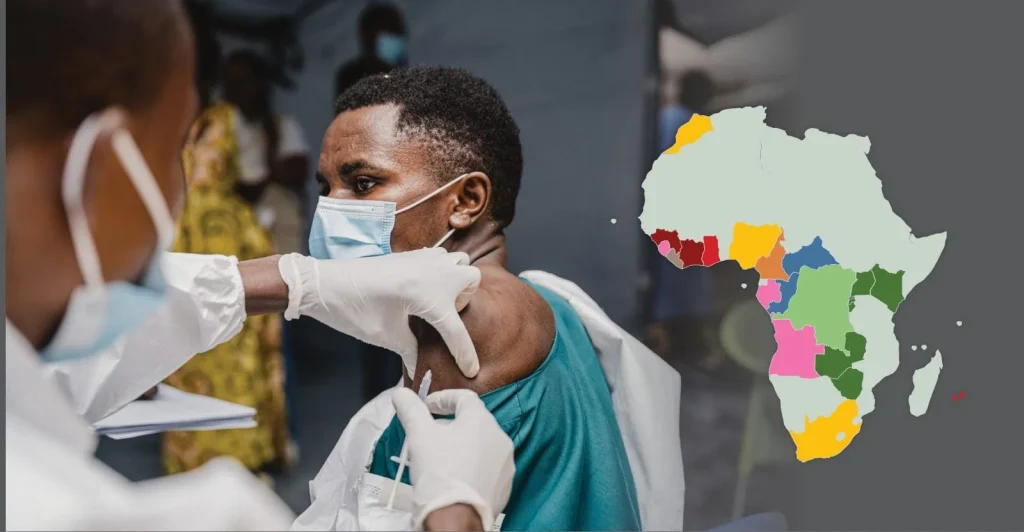
After a grueling two-year health battle, Sierra Leone has officially declared its Mpox epidemic over.
However, for the thousands who survived the virus, the fight is far from finished.
The outbreak, which began with just two confirmed cases outside Freetown, ballooned into a national crisis. Over the course of the emergency, the country recorded more than 5,000 infections and 60 fatalities.
While health officials celebrate the end of the viral spread, a social crisis remains. Survivors are facing widespread rejection, finding themselves unable to return to their normal lives due to fear and misinformation.
Fighting the Stigma
Recovered patients report severe discrimination. Many have been rejected by their families, fired from their jobs, and ostracized by their communities.
Nelson Johnson, who recovered from the virus in May, has turned his experience into advocacy. In June, he joined the Sierra Leone Epidemic Action Network to combat the false beliefs fueling this exclusion.
Johnson explains that misinformation such as believing Mpox is a curse or a result of promiscuity—drives the fear.
“You find out people are not ready to accept it… unless we decide to go to the community and explain to them,” Johnson says. “I’m now a survivor. It doesn’t mean that I can infect you. That is the only way people start believing that Mpox is real.”
Lives on Hold
For survivors like Hannah Abibu, the economic and social toll has been devastating.
“Things are not easy for me. Even a place to sleep, I don’t have. Food to eat, I don’t have,” Abibu reveals.
Her struggle highlights the harsh reality for many. “At my workplace, when they knew I had Mpox, they didn’t allow me to return. Up till now, I’m searching for a job.”
Beyond Medical Recovery
Statistically, the medical response was a success. According to data, 99 percent of the 5,000 infected individuals recovered.
However, Dr. John Abu Bakarr Conteh of the FCC Mpox Treatment Center argues that the response must go beyond physical health. He emphasizes the need for psychosocial support.
“This response is not only focusing on case management,” Dr. Conteh explains. “The psychosocial case management was paramount. We try to make sure that we have all that is needed to combat the epidemic.”
A Unique Challenge
The outbreak in Sierra Leone presented unique challenges that exacerbated the stigma. Unlike typical cases, many victims in this wave suffered from rare genital lesions. This distinct symptom made breaking the chain of transmission harder and deepened the shame associated with the disease.
Mpox is a zoonotic disease, meaning it transmits from animals to humans, as well as between humans. While the virus may be gone, the work to heal the community’s trust is just beginning.
ALSO READ: Bidding Starts:Private Firms Invited to Manage Red Sea Tourism Hub











 Armenian Dram
 Ghana Cedi
 Gambian Dalasi
 Guinea Franc
 Nigerian Naira
 CFA Franc BEAC