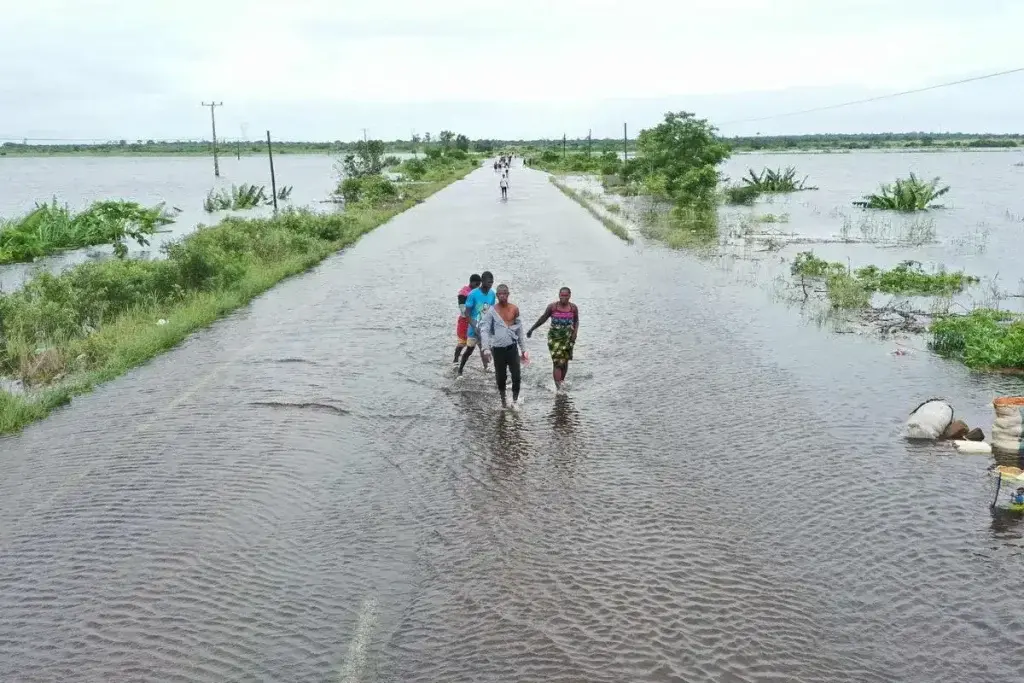
A staggering climatic shift has turned Southern Africa’s rainy season into a humanitarian nightmare. A new scientific analysis confirms that the Mozambique floods, which have claimed at least 103 lives, were significantly intensified by human-induced global warming.
According to a study released by World Weather Attribution, the region was battered by a full year’s worth of rainfall in a mere 10 days. This torrential downpour has submerged vast tracts of land, leaving search and rescue teams scrambling to navigate a landscape where roads have simply ceased to exist.
Anatomy of a “Once-in-50-Years” Event
The scale of the devastation is difficult to comprehend. Researchers have classified the downpour as a “once-in-50-years” event. While the La Niña weather phenomenon typically brings moisture to the region, the current destruction is not natural variability alone.
Scientists determined that a warmer atmosphere, fueled by fossil fuel emissions, supercharged these storms. Specifically, the study suggests climate change increased the rainfall intensity by approximately 40%.
Izidine Pinto, a senior climate researcher, emphasized the direct link between emissions and the disaster on the ground.
“Our analysis clearly shows that burning fossil fuels is increasing the intensity of extreme rainfall,” Pinto stated. “It turns events that would have happened anyway into something much more severe.”
Infrastructure Collapse Across Borders
While Mozambique is at the epicenter, the destruction ignores national boundaries. The Mozambique floods are part of a wider regional crisis affecting Zimbabwe and South Africa.
In the South African provinces of Limpopo and Mpumalanga, critical infrastructure has failed. Raging waters have washed away bridges and swallowed buildings, resulting in millions of dollars in estimated damages.
Consequently, logistics have become the primary enemy of relief efforts. In Mozambique’s Gaza and Manhica provinces, land transport is impossible. Floodwaters have severed all road connections, forcing aid workers to rely entirely on boats to reach isolated communities.
A Looming Health Catastrophe
The immediate threat of drowning has given way to a long-term survival crisis. Mozambique’s Institute for Disaster Management and Risk Reduction reports that over 650,000 people have fled their homes.
Currently, nearly 100,000 displaced citizens are crowded into temporary camps. Conditions in these makeshift shelters are deteriorating rapidly.
ActionAid Mozambique has issued a high-alert warning regarding sanitation. With clean water sources contaminated, aid groups fear an explosive outbreak of cholera and other water-borne diseases could claim even more lives than the rising waters.
____________________________________________________






 Armenian Dram
 Ghana Cedi
 Gambian Dalasi
 Guinea Franc
 Nigerian Naira
 CFA Franc BEAC