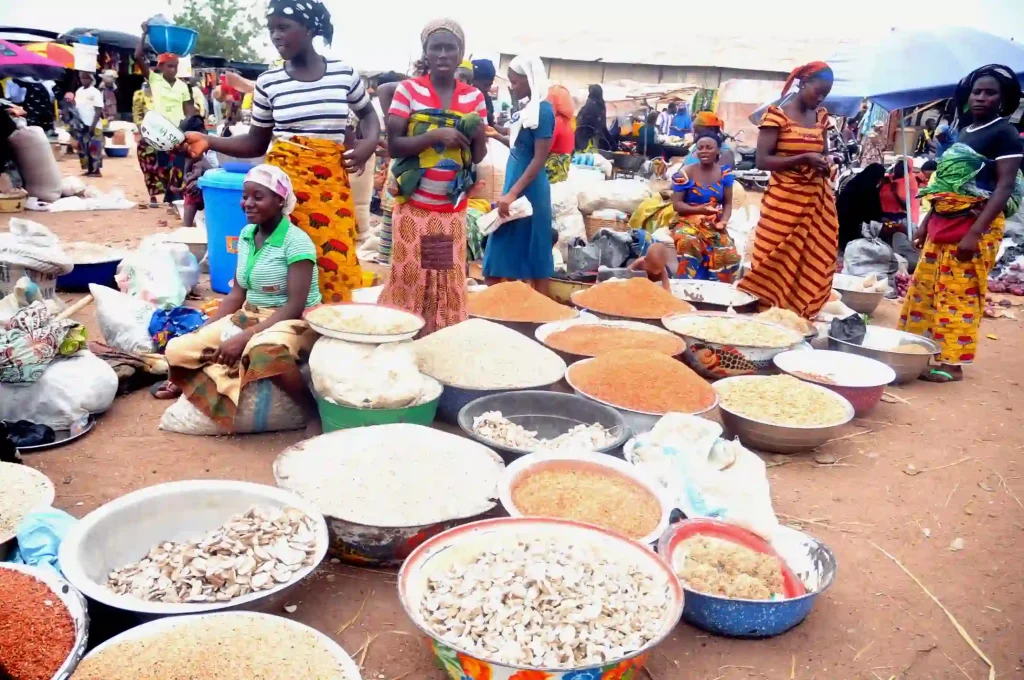
Nigerian consumers can finally breathe a sigh of relief. The National Bureau of Statistics (NBS) reports that the cost of essential staples dropped significantly to close out the year.
Data released in the latest Consumer Price Index (CPI) reveals that the Nigeria inflation rate December 2025 fell to 15.15 percent. This represents a substantial decline of 2.18 percentage points from November’s figure of 17.33 percent.
Key Drivers Behind the Nigeria Inflation Rate December 2025 Drop
The sharp reduction in headline inflation is largely tied to cheaper food. The NBS identified a widespread price drop across major dietary staples.
Specific items that became more affordable include:
-
Garri, beans, and millet.
-
Tomatoes, onions, and grounded pepper.
-
Eggs, potatoes, carrots, and vegetables.
-
Plantain and wheat grain.
Consequently, food inflation saw a massive year-on-year correction. It stood at 10.84 percent in December 2025, a dramatic fall from the crippling 39.84 percent recorded in December 2024.
A Year of Economic Recovery?
The broader economic picture shows a stark contrast to the previous year. The general inflation rate is now less than half of what it was in December 2024, when it peaked at 34.8 percent.
On a month-on-month basis, the pace of price increases also slowed. December recorded a 0.54 percent increase, down from 1.22 percent in November. The bureau noted that recent technical adjustments to its methodology accounted for some projected figures, but emphasized that the data does not reflect a deteriorating economy.
State-by-State Price Breakdown
Geography played a major role in purchasing power. For general goods, residents in Sokoto enjoyed the lowest year-on-year inflation at just 8.61 percent. Conversely, Abia State recorded the highest rate at 19.03 percent, closely followed by Ogun and Katsina.
When isolating food costs, the disparity continues.
- Most Expensive Food Markets: Yobe (15.25%), Ogun (14.12%), and Abuja (13.24%).
- Cheapest Food Markets: Akwa Ibom (4.34%), Sokoto (4.62%), and Plateau (6.19%).
Interestingly, some states saw absolute declines in food prices between November and December. Plateau, Rivers, and Zamfara all recorded negative food inflation month-on-month, meaning food actually became cheaper in those specific regions during the holiday season.
Core and Urban Metrics
Core inflation, which strips out volatile farm produce and energy, eased to 18.63 percent. This is a significant improvement from the 29.28 percent seen a year earlier.
Meanwhile, urban centers saw inflation fall to 14.85 percent year-on-year. Rural areas fared slightly better, recording a decline to 14.56 percent.
In other news, Armed Forces Remembrance Day 2026 Nigeria: Nation Honors Fallen Heroes








 Armenian Dram
 Ghana Cedi
 Gambian Dalasi
 Guinea Franc
 Nigerian Naira
 CFA Franc BEAC