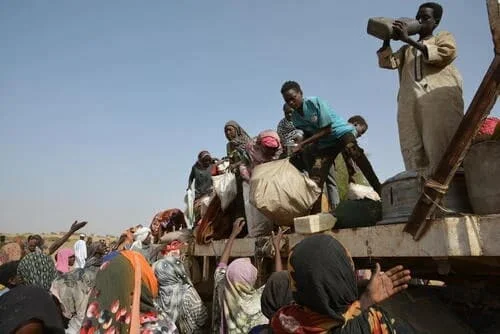
A devastating report from the United Nations reveals a massacre in Sudan. At least 1,000 civilians died during a violent three-day siege of the Zamzam displacement camp. This camp is located in the North Darfur region of Sudan.
The Rapid Support Forces (RSF) carried out the assault in April 2025. These findings add to a growing list of human rights violations linked to the paramilitary group. Consequently, the civil war in Sudan continues to escalate with no end in sight.
A Siege Defined by Brutality
The UN Human Rights Office claims the attack was a strategic move. Specifically, the RSF targeted the camp as part of its operations to capture El Fasher. This city serves as the provincial capital of North Darfur.
Before the physical assault, the paramilitary group enforced a blockade. This blockade lasted for several months. During this time, the RSF prevented food, medicine, and other life-saving supplies from entering.
The report details a harrowing three-day period between April 11 and 13. During this time, the camp became a site of extreme violence. Before the attack, Zamzam was home to over 500,000 displaced persons.
Key Findings from the UN Report:
- Summary Executions: Fighters reportedly executed hundreds of residents without trial or cause.
- Sexual Violence: The UN documented widespread instances of rape and sexual assault against residents.
- Targeted Starvation: The RSF used the pre-attack blockade as a weapon to weaken the population.
Humanitarian Catastrophe in Zamzam
Zamzam was once the largest displacement camp in Sudan. It served as a final refuge for families fleeing conflict in other regions. However, the UN report suggests that the deliberate destruction of this hub has left survivors in total desperation.
The UN Human Rights Office is calling for immediate international attention. They warn that the tactics used in Zamzam are illegal. Specifically, combining starvation with direct military targeting constitutes a severe violation of international law.
READ MORE: Blair and Dimon Warn: Europe Must Reform or Risk Irrelevance










 Armenian Dram
 Ghana Cedi
 Gambian Dalasi
 Guinea Franc
 Nigerian Naira
 CFA Franc BEAC