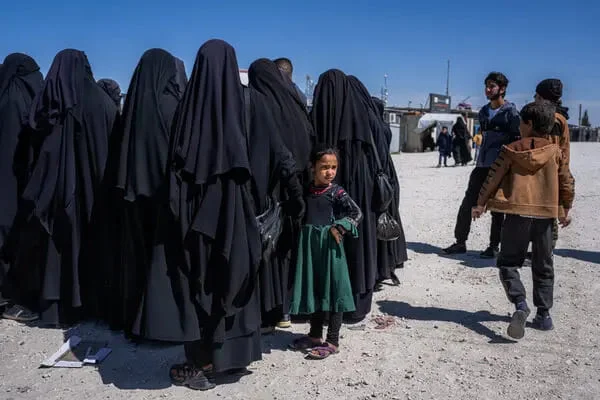
A decade of static confinement is unraveling near the Iraqi border. As a massive government offensive degrades the capabilities of the Kurdish-led Syrian Democratic Forces (SDF), the security perimeter around the Roj camp is thinning. This power vacuum has triggered a volatile mix of anxiety and anticipation among the facility’s 2,000 residents, most of whom are foreign nationals linked to the Islamic State (IS).
For nearly ten years, these women and children—families of deceased or captured militants—have lived in legal stasis. Now, the shifting frontlines offer a tangible, albeit chaotic, path to freedom or amnesty.
A Crisis of Jurisdiction
The geopolitical landscape in Damascus has changed radically. Following the 2024 ouster of Bashar al-Assad, Interim President Ahmad al-Sharaa has taken the helm. In a surprising strategic pivot, al-Sharaa has aligned his administration with the Global Coalition against IS, despite his own past insurgent ties.
However, this high-level realignment has not trickled down to the ground level at Roj camp. While the US military has initiated transfers of male IS prisoners to Iraq, no international framework exists for the women and children left behind. International security agencies fear the weakening SDF guard force could lead to unauthorized mass departures, effectively releasing unmonitored individuals back into the region.
The Foreign National Deadlock
Unlike the massive al-Hol facility, which recently fell under national army control, Roj presents a unique diplomatic nightmare. Al-Hol houses 24,000 mostly Syrian and Iraqi nationals, simplifying local repatriation. In contrast, Roj is a holding pen for the world.
Its population comprises citizens from over 50 nations, with a high concentration from former Soviet states. Reluctance from foreign governments to reclaim their citizens has turned the camp into a permanent waiting room.
Voices from Inside the Wire
The human toll of this diplomatic stalemate is severe. Interviews reveal a fractured population where some fear prosecution while others are desperate to leave.
Cassandra Judge, a Belgian national who entered Syria at 18, finds herself trapped by a technicality. Her government has prioritized repatriating mothers with children. Judge, whose French husband died in Raqqa, has no children.
Consequently, she remains stuck. She alleges that officials offered a bleak solution: they suggested she must “escape to Turkey” on her own before receiving consular aid.
A Lost Generation
The conditions inside Roj camp are fostering deep despair. Buthaina, a Tunisian national held for nine years, worries the isolation is irreversible. With her husband and son imprisoned elsewhere for insurgency links, she sees no future for the youth in the camp.
“Dead in this life,” is how she describes the residents.
She argues that without education or exposure to the outside world, the mental health of the children growing up behind the wire is collapsing. As the guards look outward at approaching forces, the families inside look at a future that remains dangerously undefined.
____________________________________________________








 Armenian Dram
 Ghana Cedi
 Gambian Dalasi
 Guinea Franc
 Nigerian Naira
 CFA Franc BEAC