On Tuesday, government officials in South Sudan rejected the notion that the country has returned to a state of war. This statement comes despite a significant spike in armed hostilities that the United Nations describes as the most intense since the 2018 peace accord.
The current wave of fighting, which began in late December, involves factions loyal to President Salva Kiir and supporters of his former political partner, Riek Machar. While the violence is currently concentrated in Jonglei State, north of the capital city of Juba, there are growing fears that the instability could derail years of delicate diplomatic efforts.
Government Frames Combat as “Security Operation”
Information Minister Ateny Wek Ateny has categorized the military activity in Jonglei as a necessary and legal security intervention. He argued that the state is not relapsing into civil war but is instead conducting operations to block rebel progress and ensure public safety.
Key pillars of the current political crisis:
- Accord Under Pressure: The administration maintains that the 2018 Revitalized Agreement (R-ARCSS) is still functional, even though the unity government has faced significant internal collapse over the past year.
- Legal Action Against Machar: Former Vice President Riek Machar has been stripped of his position and is currently being tried for “crimes against humanity.”
- Ceasefire Demands: The government has issued a formal call for the SPLM/A-IO (the primary opposition group) to halt its offensive immediately to preserve the ongoing transitional period.
A Growing Humanitarian Emergency
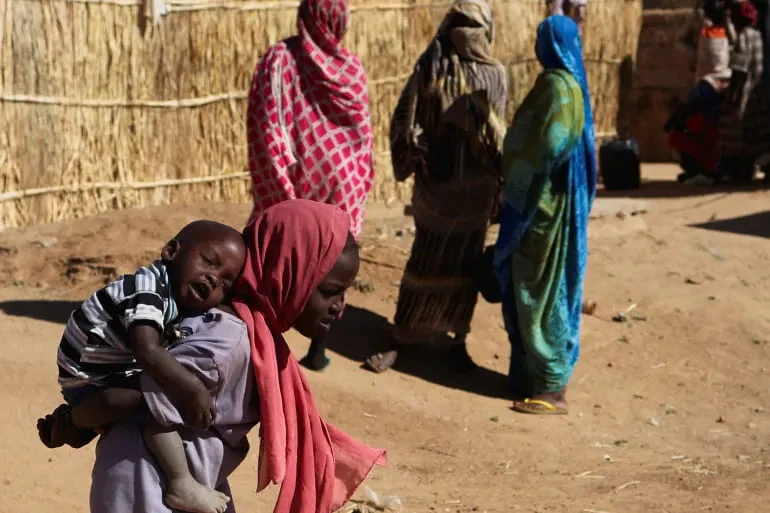
While the government downplays the scope of the conflict, the humanitarian toll is rapidly mounting. According to United Nations reports, the violence has forced more than 180,000 people to flee their homes in Jonglei State alone.
International Community Issues Warnings
The UN Mission in South Sudan (UNMISS) has raised the alarm, stating that hundreds of thousands of civilians are now in immediate danger as the fighting expands to new areas. Barney Afako, representing the UN Commission on Human Rights in South Sudan, emphasized that the unrest is not a series of isolated events but rather a “dangerous escalation” appearing in multiple regions across the country.
The Struggle of the Youngest Sovereign State
Since its formation in 2011, South Sudan has struggled to escape a cycle of internal conflict, economic hardship, and systemic governance issues. The civil war that spanned from 2013 to 2018 was meant to be permanently settled by the R-ARCSS agreement.
However, the current resurgence of heavy weaponry and mass displacement indicates that the deep-seated friction between rival political factions remains a potent threat to national stability.
READ MORE: Norway Charges Oil Execs Over $25M Congo Bribery Plot



 Armenian Dram
 Ghana Cedi
 Gambian Dalasi
 Guinea Franc
 Nigerian Naira
 CFA Franc BEAC