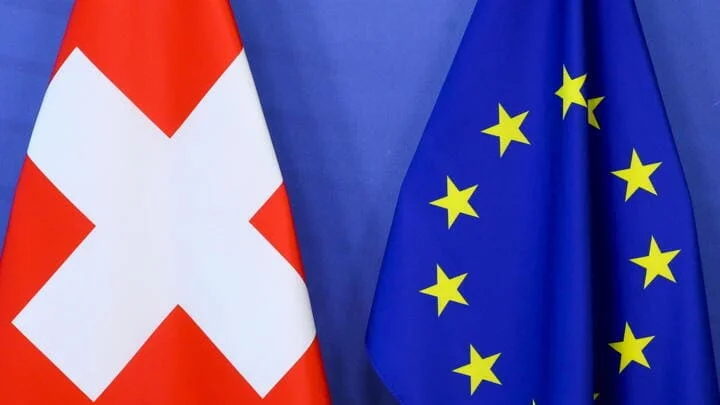
The Swiss government has secured significant domestic backing for a new agreement with the European Union. On Friday, officials confirmed that a consultation with key stakeholders yielded a largely positive response.
The ruling Federal Council reported the results. Nearly three-quarters of the country’s cantons, political parties, and associations endorsed the proposal. These measures aim to modernize the critical ties between Bern and Brussels.
The Bilateral Approach
The agreement covers a wide spectrum of sectors. These include:
- Electricity
- State aid
- Transport
- Freedom of movement
Additionally, it addresses Switzerland’s financial contribution to the bloc. This deal intends to bring the EU closer to its fourth-largest export market.
Foreign Minister Ignazio Cassis championed this “bilateral approach.” He noted that it received significantly more support than other strategies, such as seeking full EU membership or a simple free trade deal.
“This package allows us to continue this path, to boost our security, underpin our prosperity and give our young people… options for the future,” Cassis stated.
Navigating Geopolitical Instability
Some powerful interest groups still oppose the proposal. However, the Swiss administration argues that closer integration is a strategic necessity.
The government maintains that stable relations with Europe are vital. This is especially true during a period of geopolitical tension defined by the war in Ukraine and rising economic protectionism.
Addressing “Dynamic Alignment”
To mitigate concerns, the government addressed the controversial issue of “dynamic alignment.” This mechanism requires Switzerland to adapt its domestic legislation to match changes in EU law.
Officials pledged greater transparency on this matter. They announced that they will draft a new law to establish clear protocols. This legislation will dictate how and when the Swiss parliament must be consulted regarding new EU rules.
Timeline for Ratification
The government expects to send the finalized package to the Swiss parliament in March.
According to Cassis, the ratification process is likely to be lengthy. A potential public referendum on the agreement is projected to take place in 2027 or later.
READ ALSO: Oil Prices Rise as Peace Talks Stall and Fed Cut Hopes Grow







 Armenian Dram
 Ghana Cedi
 Gambian Dalasi
 Guinea Franc
 Nigerian Naira
 CFA Franc BEAC