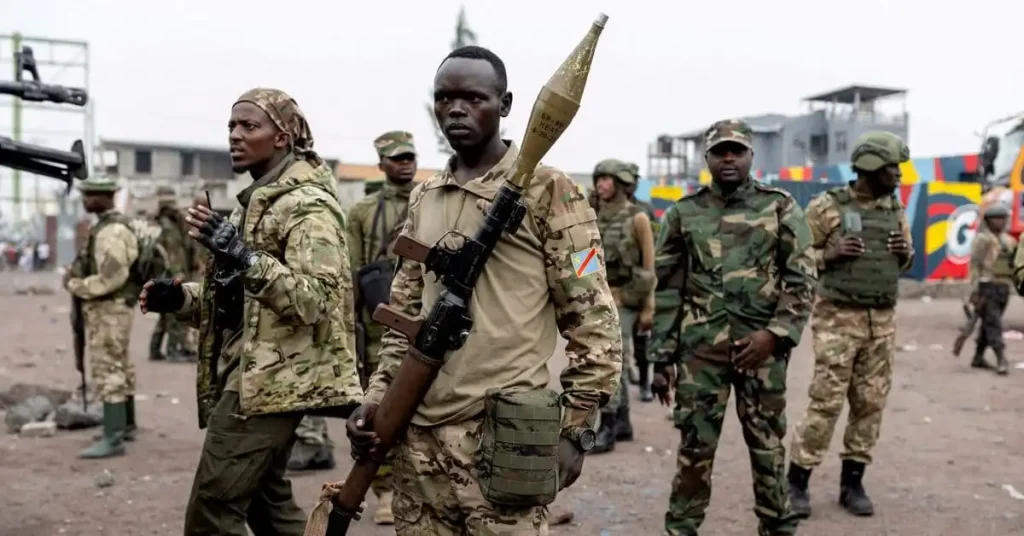
A fresh wave of displacement is overwhelming border towns in Burundi as thousands of civilians flee intensifying combat in eastern Democratic Republic of Congo (DRC).
The surge in refugees follows a brutal escalation in the South Kivu province, where the M23 armed group has ramped up its offensive. Regional officials report that more than 400 civilians have been killed in the recent violence, forcing families to leave everything behind in a desperate bid for safety.
“Deplorable” Conditions in Camps
The influx has strained local resources. At the makeshift camp in Kansega, western Burundi, new arrivals describe the living conditions as deplorable.
Refugees report a total lack of basic necessities, including water, toilets, and shelter. Many arrived destitute, having endured extreme hardships during their escape.
“We ask Kagame to have a human heart. If he tells us to go back, we can. That’s what we’re asking of him. Pity us,” pleaded Nayonde Mbilize, a Congolese refugee, referring to Rwandan President Paul Kagame.
According to local UN partners, the violence has displaced more than 200,000 people across the province since December 2, with over 70 confirmed dead in that short window alone. The UN refugee agency is currently working to establish additional camps to manage the growing numbers.
Fears of Regional Spillover
The conflict is dangerously close to crossing international borders. Reports indicate that artillery shells have landed in the town of Rugombo, located on the Burundian side of the border.
This development has raised serious concerns that the fighting between the Congolese army and the Rwanda-backed M23 rebels could formally spill over into Burundian territory, putting both refugees and local populations at risk of artillery fire.
Peace Deal Tested
The latest offensive comes despite high-profile diplomatic efforts. Just last week, the presidents of Congo and Rwanda signed a U.S.-mediated peace agreement in Washington.
However, the accord faces significant challenges:
- Exclusion of Rebels: The agreement did not include the M23 rebel group. The group is negotiating separately with the Congolese government, though a previous ceasefire has collapsed with both sides trading blame for violations.
- Rwandan Obligations: The new deal obliges Rwanda to halt its support for armed groups and work toward ending hostilities.
A Deepening Crisis
Eastern Congo remains a volatile flashpoint, with more than 100 armed groups vying for control of the region’s vast mineral wealth. The M23 remains the most prominent and well-equipped of these factions.
The ongoing violence has fueled one of the world’s most severe humanitarian emergencies. According to the UN refugee agency, more than 7 million people remain displaced across the country as the conflict grinds on.
ALSO READ: Ghana Threatens Reciprocal Action After Citizens Deported from Israel






 Armenian Dram
 Ghana Cedi
 Gambian Dalasi
 Guinea Franc
 Nigerian Naira
 CFA Franc BEAC