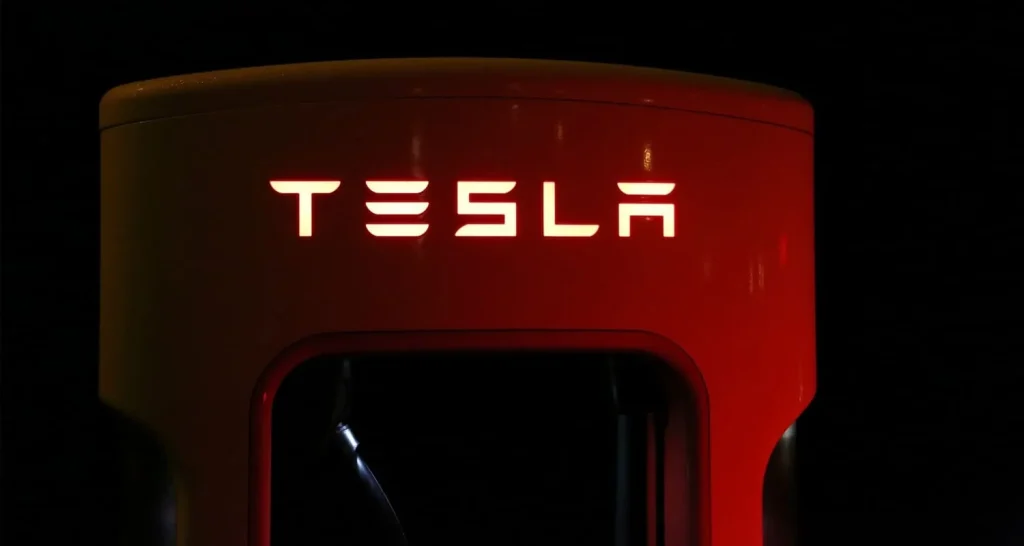
A massive wave of optimism hit the markets this Friday, driving Tesla shares up by more than 5%. The catalyst is not a new car model, but a bold structural theory: the creation of an Elon Musk “super-company.”
Reports indicate that SpaceX is actively exploring merger possibilities with both xAI and Tesla. This potential consolidation comes just months before SpaceX plans a highly anticipated initial public offering (IPO) later in 2026.
For shareholders, this is the endgame they have been waiting for. A merger would effectively combine Musk’s fragmented automotive, aerospace, and artificial intelligence ventures into a single, dominant entity.
The Financial Web Tightens
The groundwork for this union is already visible in the financials. The boundaries between Musk’s companies are becoming increasingly porous, with capital flowing freely between them.
Recent moves highlight this interdependence:
- Tesla Investment: The EV giant recently poured $2 billion into xAI.
- SpaceX Support: The aerospace company matched that commitment, sending another $2 billion to the AI startup during a fundraising round.
- xAI Valuation: The AI firm recently smashed targets, raising $20 billion to reach a staggering $230 billion valuation.
Consequently, xAI has cemented itself as one of the world’s most valuable private tech firms. This financial entanglement suggests a formal union could be the next logical step to maximize capital efficiency.
Why the “Super-Company” Matters for Tesla Shares
Merging these giants solves a critical problem: focus. Critics have long argued that Musk is too distracted by politics and side ventures. A consolidated structure would align all his interests under one roof.
Furthermore, the technological synergies are immense.
Following the 2025 absorption of X (formerly Twitter) into xAI, the startup gained access to real-time global conversation data. Integrating this with Tesla would unlock a treasure trove of real-world driving data. This combination is essential for training the next generation of AI models.
Accelerating the AI Roadmap
This consolidation is not just about money; it is about survival and dominance. Tesla shares are reacting to the potential for accelerated product timelines.
The unified entity would prioritize two main goals:
-
Full Self-Driving (FSD): Musk aims to provide autonomous transport to 50% of the U.S. population by the end of 2026.
-
Optimus Robot: Production of the humanoid laborer is slated for late 2025.
By pooling resources, the new super-company could transition Tesla from a car manufacturer to a robotics powerhouse much faster than previously thought.
The Trillion-Dollar Stakes
The ultimate target is astronomical. Tesla’s board has approved a pay package for Musk worth $1 trillion. However, there is a catch.
To unlock it, Musk must drive the company’s market capitalization to $8.5 trillion. Currently, Tesla fluctuates between $850 billion and $1 trillion, while SpaceX sits above $250 billion.
Combining these assets might be the only realistic path to hitting that historic valuation. As the lines between rocket science, AI, and electric transport blur, investors are clearly buying into the vision.





 Armenian Dram
 Ghana Cedi
 Gambian Dalasi
 Guinea Franc
 Nigerian Naira
 CFA Franc BEAC