Grantee organisations supported by the Ford Foundation across West Africa are developing new strategies to tackle the environmental and social impacts of extractive industries while advancing a fair and inclusive energy transition for communities in the region.
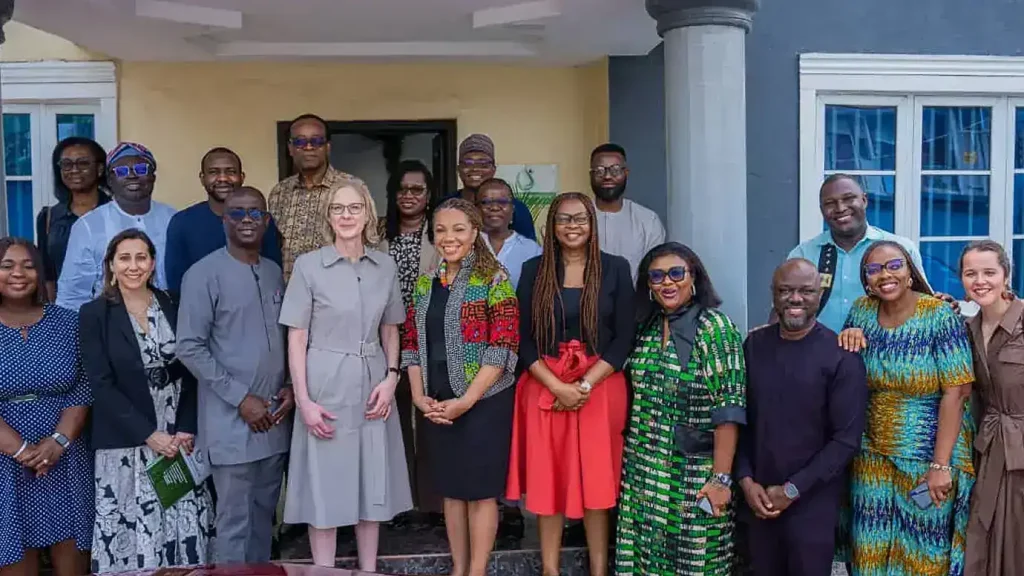
At a high-level meeting held in Lagos, Nigeria, partners from Nigeria, Senegal and Ghana gathered to share how their initiatives are empowering local communities and promoting sustainable solutions to climate and energy challenges.
The meeting, attended by Heather Gerken, President of the Ford Foundation, focused on strengthening partnerships and supporting local leadership in shaping Africa’s evolving energy landscape.
Balancing energy transition and community rights
Speaking during the session, Chi Chi Aniagolu, the foundation’s Regional Director for West Africa, said the region faces overlapping climate, social and economic pressures that require coordinated solutions.
“West Africa’s communities face multiple challenges linked to climate change and energy transition,” she said. “Our engagement with partners shows there are practical ways to ensure the shift to clean energy strengthens community rights, promotes accountability and delivers lasting benefits for people and the environment.”
Discussions were moderated by Emmanuel Kuyole, Programme Officer at the Ford Foundation’s West Africa office, who guided conversations around green industrialisation, energy access and a just transition away from fossil fuels.
Tackling energy poverty and social inequality
Participants highlighted projects addressing the intersection of climate change, poverty and gender inequality.
Victoria Ibezim-Ohaeri, Executive Director of Spaces for Change, pointed to research linking energy poverty to gender-based risks in extractive communities.
According to her, limited access to clean energy exposes women to health hazards, increases household burdens and restricts economic opportunities.
“Promoting clean cooking fuels and safer energy alternatives not only reduces emissions but also protects women and girls in vulnerable communities,” she said.
Expanding energy access for businesses
Lanre Shasore, Senior Advisor for Africa at Sustainable Energy for All, stressed that energy access is essential for economic resilience.
“Energy access is not just about megawatts,” Shasore said. “It determines whether a farmer can process produce, whether a small business can operate, and whether communities can earn sustainable livelihoods.”
Justice for oil-impacted communities
Environmental activist Nnimmo Bassey, Executive Director of the Health of Mother Earth Foundation, urged policymakers to prioritise justice for communities that have long borne the environmental costs of fossil fuel extraction.
“A true transition must begin with justice,” Bassey said. “Without restoring damaged lands, water systems and livelihoods, the promise of a green future will remain incomplete for frontline communities.”
Strengthening transparency in energy governance
Meanwhile, Benjamin Boakye, Executive Director of the Africa Centre for Energy Policy, emphasised the role of transparency in ensuring communities benefit from natural resource wealth.
“When communities understand energy contracts and revenues, they can hold governments and companies accountable,” he said. “That transparency can turn energy from a source of conflict into a driver of shared prosperity.”
The discussions highlighted how collaboration between civil society organisations, policymakers and international partners is helping to advance climate justice, protect livelihoods and ensure that West Africa’s energy transition is both sustainable and inclusive.



 Armenian Dram
 Ghana Cedi
 Gambian Dalasi
 Guinea Franc
 Nigerian Naira
 CFA Franc BEAC