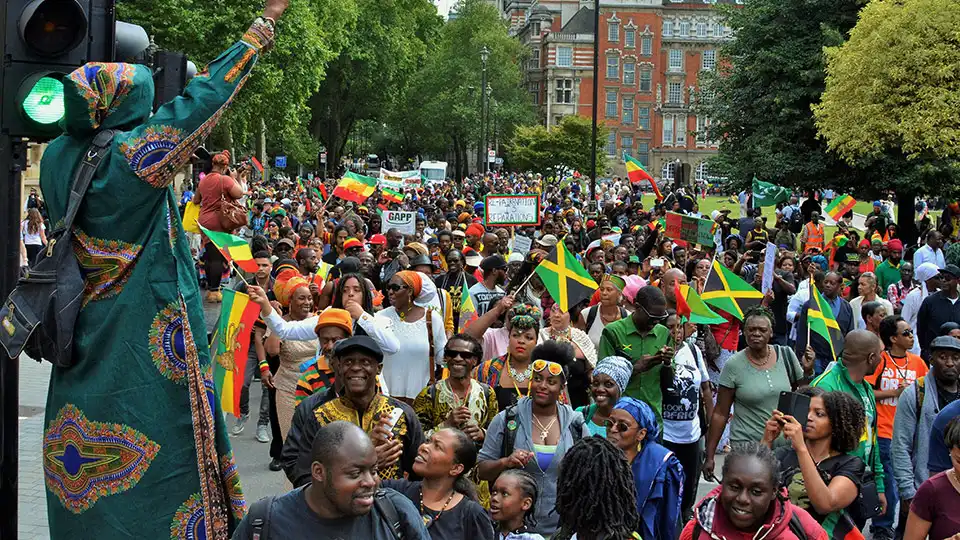
A pivotal diplomatic delegation from the Caribbean Community (CARICOM) arrived in the United Kingdom this week. This high-level group is scheduled for engagements between November 17 and 20, 2025.
This historic mission aims to directly engage British officials and lawmakers on the issue of reparations for the enduring legacies of slavery and colonialism.
The discussions seek to address the deep historic injustices suffered by African populations. They will also cover the systemic impacts that persist today, including entrenched racism.
The Comprehensive Demand for Justice
CARICOM, a bloc comprising 15 Caribbean nations, is championing a comprehensive official reparations plan. This framework outlines a path for accountability. It requires more than mere statements of regret. Key elements of the Caribbean demand include:
- Formal Apology: Explicitly acknowledging the crimes committed during the transatlantic slave trade.
- Debt Cancellation: Addressing the “fiscal entrapment” that Caribbean governments inherited from the colonial structure.
- Health Crisis Remediation: Funding to address the high incidence of chronic diseases (like Type 2 diabetes) linked to enslavement brutality.
- Educational Initiatives: Funding to repair the destruction of historical memory and ensure adequate research centers.
Resistance and The Knowledge Gap
Despite growing global momentum, many European officials remain hesitant. British Prime Minister Keir Starmer has publicly expressed reluctance to discuss reparations. He prefers to emphasize a future-oriented approach rather than re-examining the past.
This reluctance is challenged by a massive lack of historical awareness in Britain. A recent survey highlighted a profound knowledge gap:
- 85% of British respondents were unaware that the UK forcibly transported more than 3 million Africans to the Caribbean.
- 89% did not know that Britain enforced slavery in the Caribbean for over 300 years.
However, support for restorative justice is growing. 63% of UK adults now support issuing a formal apology.
A Continent Unites: The African Union Strategy
The diplomatic pressure from the Caribbean is not isolated. The African Union (AU) is also actively formulating a similar, wide-ranging strategy. The AU has designated 2025 as the “Year of Justice for Africans and People of African Descent Through Reparations.”
The AU’s framework aligns with CARICOM’s goals. It emphasizes structural reform. This approach frames reparations as a mechanism for redistributing economic power. It demands greater African participation in global decision-making and systemic changes to the global financial architecture.
The visit by the CARICOM delegation marks a crucial juncture. It aims to build international alliances and transform the reparations claim from a moral appeal into a non-negotiable legal and economic imperative.







 Armenian Dram
 Ghana Cedi
 Gambian Dalasi
 Guinea Franc
 Nigerian Naira
 CFA Franc BEAC