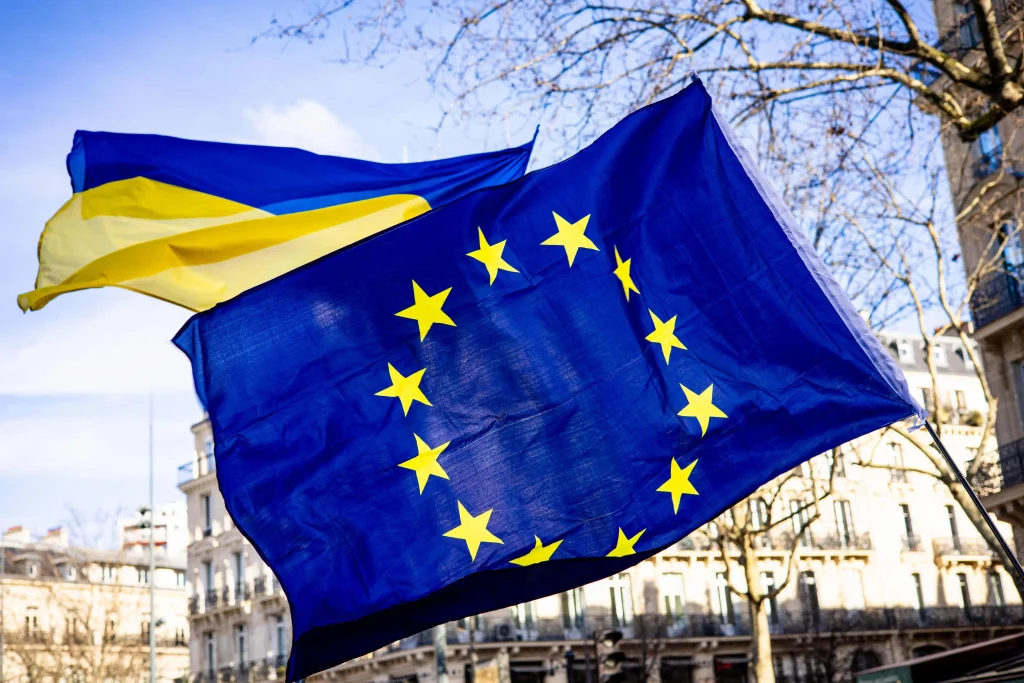
The European Union has finalized a massive financial support package for Ukraine. The bloc has pledged €90 billion ($105.46 billion) to support the nation over the next two years.
On Friday, Ukrainian President Volodymyr Zelenskiy expressed deep gratitude for the deal. He described it as a vital move that “truly strengthens our resilience.”
This agreement serves as a critical financial lifeline. Experts previously warned that without this intervention, Ukraine could have run out of funds by the second quarter of next year. Such a cash crunch would have significantly increased the risk of a Russian military victory.
The “Frozen Assets” Debate
While the total sum is significant, the summit was marked by a major shift in strategy. Initially, EU leaders explored a controversial plan to use frozen Russian sovereign assets to fund the loan. However, they ultimately opted to borrow the funds through traditional capital markets instead.
Why the Initial Plan Stalled
Several factors prevented the use of Russian assets at this stage:
- Legal Risks: Countries like Belgium, which holds roughly €185 billion in Russian assets, sought guarantees. They feared legal and financial retaliation from Moscow if the funds were released.
- Economic Stability: There were deep concerns that seizing assets could undermine international trust in the Eurozone. This might deter other nations from storing their reserves in Europe.
- Political Pressure: Russian President Vladimir Putin condemned the proposal as “daylight robbery.” He warned that proceeding would cause “grave consequences” for the global financial system.
Germany’s Role in the Agreement
German Chancellor Friedrich Merz was a vocal proponent of using Russian reparations to fund the loan. Although the EU pivoted to direct borrowing, Merz praised the final agreement as a victory for Kyiv. He noted that the funds would be available as early as mid-January.
“This is good news for Ukraine and bad news for Russia, and this was our intention,” Merz stated following the summit.
Ukrainian officials echoed this sentiment. Deputy Foreign Minister Sergiy Kyslytsya remarked that while the funding method changed, the result remains “workable.” He noted that in diplomacy, “perfect is the enemy of good.”
Market Outlook and the Mercosur Deal
Financial analysts have responded positively to the news. Carsten Brzeski of ING noted that failing to reach an agreement would have been a “symbolic disaster.” He suggested that there is currently sufficient investor appetite for these new EU-backed loans.
Beyond Ukraine, the summit addressed the Mercosur free trade agreement. Chancellor Merz and European Commission President Ursula von der Leyen expressed confidence in the deal. They believe the long-debated pact with the South American bloc could be signed in January 2026, despite some remaining opposition from France and Italy.





 Armenian Dram
 Ghana Cedi
 Gambian Dalasi
 Guinea Franc
 Nigerian Naira
 CFA Franc BEAC