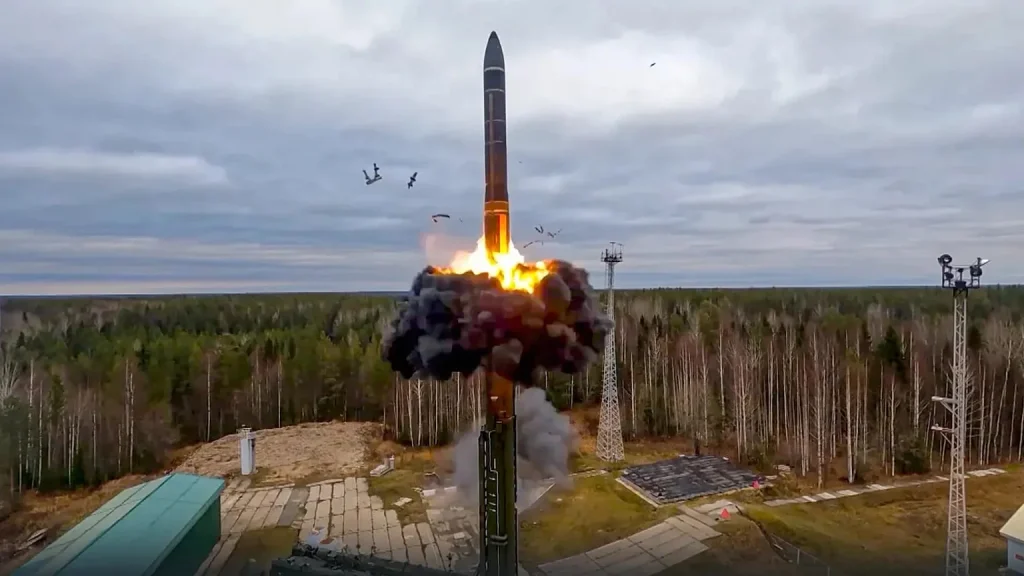
On Friday, January 9, 2026, the conflict in Eastern Europe reached a dangerous new threshold. Overnight, Russia launched a powerful Oreshnik hypersonic missile at Western Ukraine. Specifically, the missile struck a target just 60 kilometers (40 miles) from the Polish border. Consequently, Kyiv has categorized the strike as a direct threat to European and NATO security, calling for an immediate global response.
A High-Speed Threat to European Security
The Oreshnik, which translates to “Hazel Tree,” is a newly developed intermediate-range ballistic missile designed to be virtually impossible to intercept. According to the Ukrainian military, the missile reached staggering speeds of 13,000 km per hour during its flight toward the Lviv region.
While the missile is technically capable of carrying nuclear warheads, there was no indication that it was armed with anything other than conventional explosives during this specific strike.
Controversial Justification: The “Residence Attack”
The Kremlin stated that the launch served as a retaliatory measure for an alleged Ukrainian drone attack on one of President Vladimir Putin’s residences in Northern Russia on December 29. However, this claim has been met with widespread skepticism:
- Ukraine’s Denial: Kyiv officials called the allegation an “absurd lie” designed to sabotage ongoing peace negotiations.
- U.S. Assessment: President Donald Trump has publicly stated that he does not believe the residence attack occurred, describing the Russian narrative as a fabrication.
- Diplomatic Fallout: Furthermore, Ukrainian Foreign Minister Andriy Sybiha warned that Putin is using “hallucinations” to justify launching advanced missiles near NATO borders. He characterized the event as a “global threat.”
Humanitarian Crisis in Kyiv
While the Oreshnik targeted the west, a massive wave of 242 drones and 36 missiles simultaneously battered the capital, Kyiv. As a result, the consequences have been catastrophic for the civilian population:
- Casualties: At least four people were killed and more than 20 others were injured during the night.
- Infrastructure: The strikes knocked out power for over 500,000 homes. In a city facing -10°C (14°F) temperatures and heavy snow, water and heat supplies have also been disrupted.
- Diplomatic Damage: Additionally, reports indicate that the Qatari Embassy in Kyiv sustained damage during the barrage.
Stalled Peace Efforts
The timing of the strike is particularly sensitive because diplomats from Ukraine, the U.S., and European allies are currently meeting in Paris to finalize a peace framework. Analysts suggest that Russia’s use of the Oreshnik—for only the second time in the war—is a deliberate display of force. Essentially, Moscow appears to be seeking leverage before any formal proposal is presented.
As the smoke clears in Lviv and Kyiv, the international community faces a critical test. The proximity of the hypersonic strike to the EU border has ignited fresh debates regarding the necessity of advanced air defense systems for Ukraine’s western frontier.









 Armenian Dram
 Ghana Cedi
 Gambian Dalasi
 Guinea Franc
 Nigerian Naira
 CFA Franc BEAC