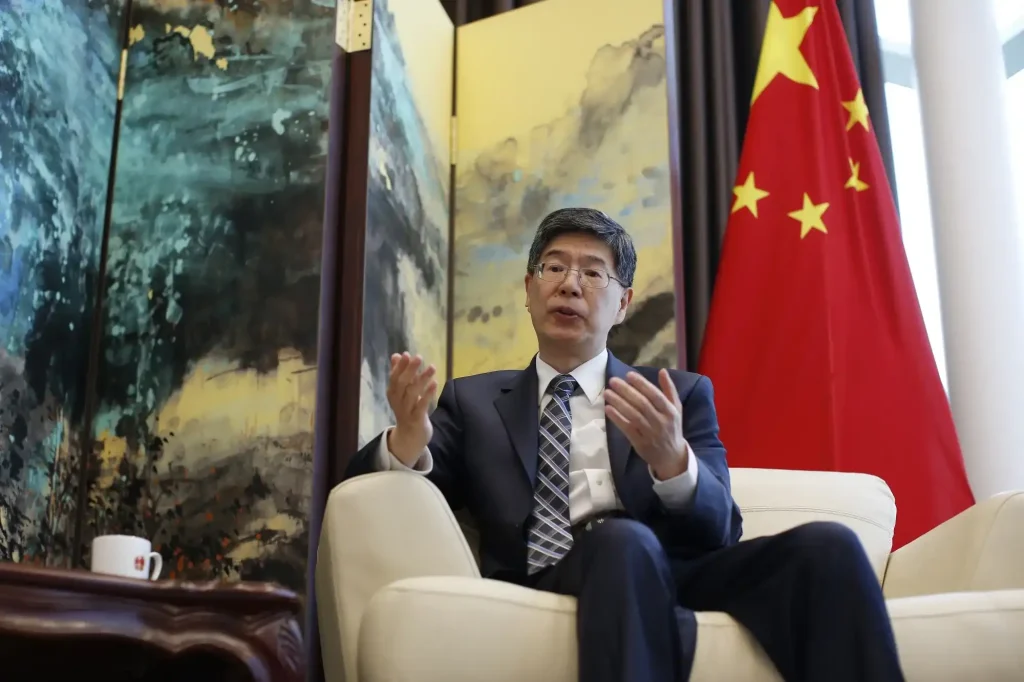
In a significant step toward mending relations, China’s Foreign Minister Wang Yi expressed Beijing’s readiness to collaborate with Canada on resuming comprehensive dialogues and exchanges.
During a meeting in Beijing, Wang conveyed this commitment to his Canadian counterpart, Anita Anand, emphasizing efforts to address mutual concerns and foster greater understanding between the two nations.
Renewed Focus on Communication and Trust
Wang highlighted the importance of boosting interactions at various levels to clear obstacles and restore confidence. He noted that enhanced communication could help eliminate external disruptions that have strained ties in recent years.
This approach aims to create a stable foundation for bilateral cooperation, allowing both sides to tackle issues openly and constructively. Anand, engaging in these discussions, acknowledged the value of such initiatives in navigating global challenges together.
The meeting underscores a mutual desire to move past historical frictions, which have included trade disputes and diplomatic tensions. By prioritizing trust-building, China and Canada seek to pave the way for more productive partnerships in areas like economy, security, and culture.
Defending Multilateralism and Trade Norms
A key element of Wang’s remarks was the call for joint action in upholding multilateral principles and the global trade system. He stressed that both countries, as influential players, should work collaboratively to safeguard fair practices and international rules.
This shared responsibility is particularly relevant amid rising protectionism and geopolitical uncertainties. Strengthening these frameworks could benefit not only bilateral relations but also contribute to worldwide stability and prosperity.
Canada, with its strong emphasis on free trade agreements and international alliances, aligns with this vision. The duo’s commitment to multilateralism reflects a broader strategy to counter unilateral actions that undermine global cooperation.
Background on Evolving Bilateral Relations
China-Canada ties have experienced ups and downs, influenced by factors such as economic interdependence and differing views on human rights and security. Despite challenges, both nations recognize the benefits of engagement.
China views Canada as a vital partner in North America for resources, technology, and markets, while Canada sees opportunities in China’s vast consumer base and investment potential.
Recent diplomatic overtures signal a thaw. Resuming dialogues could lead to renewed economic deals, cultural exchanges, and joint initiatives on climate change and health. For instance, expanding trade in agriculture, energy, and clean technologies holds promise for mutual growth.
Implications for Global Diplomacy
This development could ripple across international forums, where China and Canada often intersect, such as the United Nations and G20.
By rebuilding trust, they might collaborate more effectively on pressing issues like sustainable development and pandemic preparedness. It also demonstrates diplomacy’s role in de-escalating tensions without resorting to confrontation.
For businesses and citizens, improved relations mean enhanced opportunities. Canadian exporters could gain better access to Chinese markets, while Chinese firms might find a more welcoming environment in Canada. Overall, this meeting lays groundwork for a more resilient partnership.
Looking Ahead: Pathways to Cooperation
As discussions progress, both sides are expected to outline concrete steps, including high-level visits and working groups on specific topics. Wang’s optimistic tone suggests a proactive stance, urging swift implementation to yield tangible results. Anand’s participation reinforces Canada’s interest in balanced engagement.
In an interconnected world, such diplomatic resets are crucial. China and Canada’s renewed commitment offers a model for resolving differences through dialogue, potentially inspiring other nations facing similar hurdles. The focus on legitimate concerns ensures that sensitivities are respected, fostering equitable outcomes.
This engagement comes at a pivotal time, with global economies recovering and alliances shifting. By prioritizing communication and multilateral defense, the two countries aim to contribute positively to international peace and prosperity. Stakeholders will watch closely as these pledges translate into actions, hoping for a stronger, more collaborative era.
Progress Made in Controlling Ebola Outbreak in Bulape, Congo











 Armenian Dram
 Ghana Cedi
 Gambian Dalasi
 Guinea Franc
 Nigerian Naira
 CFA Franc BEAC