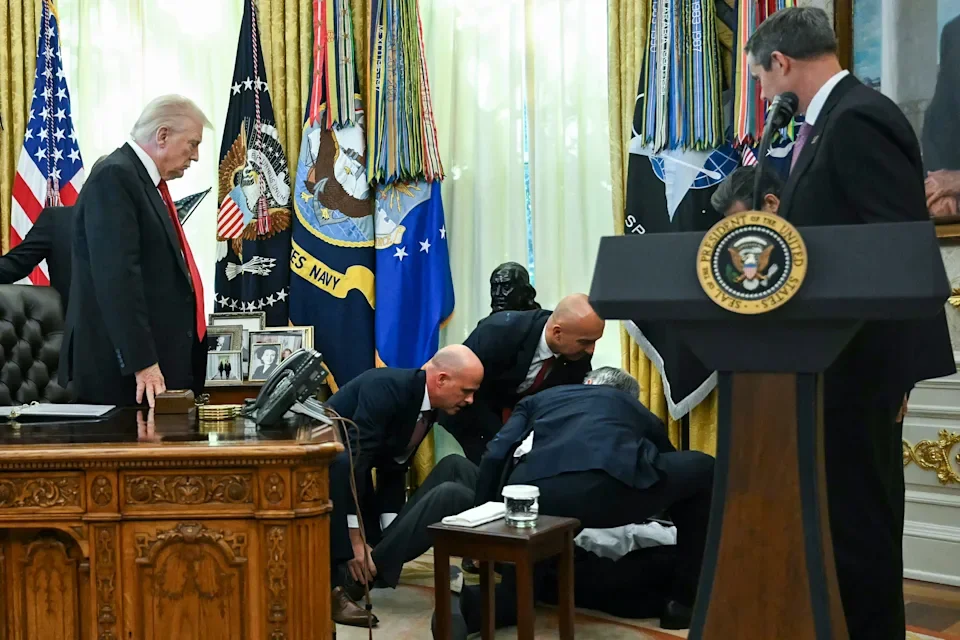
Since U.S. President Donald Trump issued his stark warning of potential military intervention in Nigeria on November 1, 2025, the West African nation has witnessed a chilling uptick in terrorist violence.
From school abductions in Kebbi to church raids in Kwara, attacks have intensified, prompting a provocative question: Is this a genuine escalation needing external aid, or a manufactured crisis to justify a foreign “savior” swooping in?
As incidents triple in frequency over the past three weeks, Nigerians are divided between fear, skepticism, and calls for homegrown solutions.
Trump’s Bombshell: “Guns-a-Blazing” Threat Over “Christian Genocide”
Trump’s Truth Social post on November 1 stunned the world. Citing what he called an “existential threat” to Christians, the president threatened to halt all U.S. aid worth $1.2 billion annually and prepare Pentagon plans for “fast, vicious” strikes against “Islamic terrorists.”
He designated Nigeria a “Country of Particular Concern” for religious freedom violations, echoing reports from groups like Open Doors claiming Nigeria accounts for 80% of global anti-Christian violence.
The rhetoric, amplified by U.S. Senator Ted Cruz and Saudi Crown Prince Mohammed bin Salman, framed the crisis as a moral imperative. Trump vowed action if Abuja failed to act, prompting Nigerian President Bola Tinubu to push back: “Nigeria rejects religious persecution and welcomes support that respects our sovereignty.”
The Timing: Attacks Triple Since November 1
Data from security trackers paints a grim picture. According to the Armed Conflict Location & Event Data Project (ACLED), terrorism incidents in Nigeria jumped 200% from October’s 15 attacks to 45 in the first three weeks of November many in Christian-majority areas.
- November 17: 25 girls abducted from a Kebbi school; Vice Principal killed resisting.
- November 19: Eruku church raid in Kwara leaves 3 dead, pastor kidnapped.
- November 20: ISWAP executes an army general in Borno; JNIM imposes fuel blockades in Zamfara.
- November 21: Boko Haram ambushes a convoy in Yobe, killing 12 soldiers.
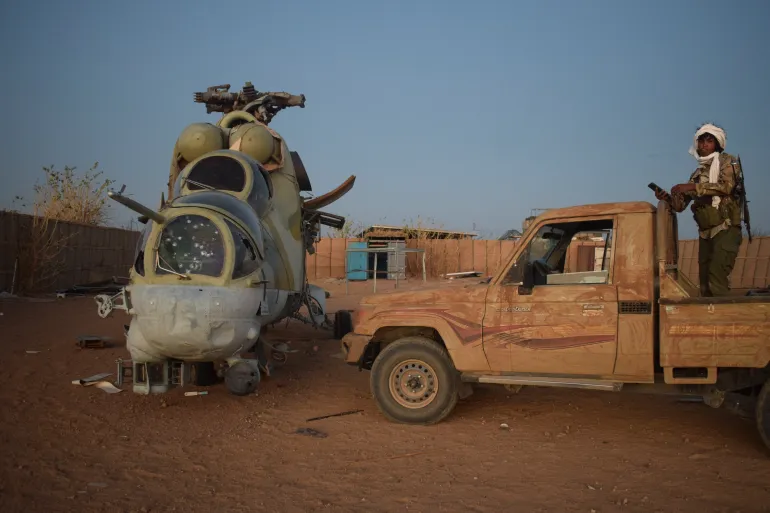
The Sahel-wide toll hit 11,200 deaths this year, with Nigeria’s northeast and northwest bearing the brunt. Boko Haram and ISWAP control swathes of Borno, while JNIM’s southward push from Mali exploits porous borders. Banditry in the northwest, often overlapping with extremism, has displaced 2.9 million.
Conspiracy Whispers: Orchestrated to Invite U.S. “Help”?
Online, the timing fuels dark theories, with users alleging attacks are staged to validate Trump’s narrative and pave the way for U.S. boots on the ground. “Why now? It’s like someone’s lighting matches to prove the house is on fire,” tweeted an activist
Skeptics point to historical precedents: U.S. interventions in Libya (2011) and Iraq (2003) followed amplified “humanitarian” crises.
In Nigeria, critics like Inibehe Effiong argue Trump’s rhetoric—prompted by conservative lobbies—ignores that most victims are Muslims, and security forces commit abuses too (e.g., extrajudicial killings). “This isn’t genocide; it’s complex conflict. External ‘help’ could worsen it,” Effiong said.
Proponents of the theory cite JNIM’s unusual northwest incursions, traditionally a bandit domain, as suspiciously timed. “Coincidence or coordination to show Nigeria ‘needs’ America?” questions a viral thread.
Counterarguments: A Long-Brewing Storm, Not a Setup
Experts dismiss conspiracy as oversimplification. The Council on Foreign Relations notes violence correlates with poverty (31% unemployment), climate stress, and arms from Sahel coups not foreign plots. “Terrorism here is homegrown chaos, not Hollywood scripting,” says analyst Kabir Adamu.
The UN’s 2025 report attributes the surge to JNIM’s expansion post-Mali instability, not U.S. tweets. Nigeria’s forces killed 13,500 terrorists this year, per the military, but critics highlight underreported abuses fueling recruitment.
Tinubu’s administration welcomes “respectful” U.S. aid but rejects intervention, emphasizing ECOWAS-led efforts. Rev. John Hayab of the Christian Association of Nigeria sees Trump’s words as pressure, not provocation: “It forces accountability, but invasion would be disastrous.”
The Stakes: Help or Harm?
If genuine escalation, U.S. support could bolster intelligence and training, as in past Sahel ops. But history warns of blowback: Libya’s 2011 intervention birthed ISIS affiliates. With 220 million people split evenly between Christians and Muslims, framing it as “Christian genocide” risks alienating the north.
As JNIM eyes gold mines and Boko Haram bombs markets, Nigeria stands at a crossroads. Trump’s saber-rattling may spotlight the crisis, but locals demand sovereignty: “We need partners, not saviors,” says Effiong. Whether orchestrated or organic, the surge demands answers at home, not from helicopters.
READ ALSO: EU Slams Sanctions on Sudan Militia Leader Over War Crimes



 Armenian Dram
 Ghana Cedi
 Gambian Dalasi
 Guinea Franc
 Nigerian Naira
 CFA Franc BEAC