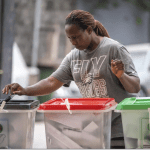
Diplomatic relations between Pretoria and Washington have deteriorated sharply this week. The escalation follows the detention and deportation of seven Kenyan nationals by South African authorities. The individuals were working at a Johannesburg facility dedicated to processing American visa applications for white South Africans.
The Department of Home Affairs confirmed the arrests. Intelligence reports indicated the workers had entered South Africa on tourist visas but were illegally employed at the center. This facility serves as a key hub for the Trump administration’s controversial initiative to grant refugee status to white Afrikaners.
Visas and Violations
South African officials described the raid as a standard law enforcement operation targeting visa fraud. They denied any political motivation. The department stated the workers were performing duties that violated their entry conditions.
“They had previously been denied work visas but were found engaging in work despite only being in possession of tourist visas,” the government said in a statement.
Consequently, authorities deported the seven individuals. They also declared them “undesirable persons,” banning their re-entry into South Africa for five years. Pretoria expressed concern over the apparent coordination between foreign officials and undocumented workers. The government has opened diplomatic channels with both the US and Kenya to resolve the protocol breach.
Officials emphasized that the operation did not occur at a diplomatic compound. Furthermore, no American officials were detained.
US Alleges Interference
The United States responded with strong criticism. Tommy Pigott, a principal deputy spokesperson for the State Department, called the raid “unacceptable.” He characterized it as interference in American refugee operations.
Pigott stated that Washington demands immediate clarification. The US expects full accountability from the South African government regarding the incident.
The controversy stems from the US administration’s decision to prioritize white South Africans for refugee resettlement. The US recently reduced its annual global refugee intake from 125,000 to just 7,500. However, it carved out a specific pathway for Afrikaners, citing claims of targeted persecution.
Genocide Claims vs. Crime Statistics
The refugee program has become a flashpoint in an increasingly hostile relationship. President Donald Trump has frequently asserted that Afrikaners face “genocide.” The South African government vehemently rejects this claim.
Official crime data does not support the assertion that white farmers are more likely to be victims of violent crime than the general population.
- Homicide Rates: Farm murders account for approximately 0.2% of all homicides in South Africa.
- Victim Demographics: In the 2023-2024 financial year, police recorded 49 murders on farms out of 27,621 total murders nationally.
- General Safety: Statistics show that violent crime affects all South African communities, with the majority of murder victims being young black men in urban areas.
Diplomatic Fallout
The political friction has triggered tangible consequences. The United States recently boycotted the G20 summit hosted by South Africa. Additionally, Washington indicated it would exclude South African officials from future economic meetings under current leadership.
Tensions are further fueled by South Africa’s land reform debate. Due to apartheid’s legacy, the white minority still owns the majority of private farmland.
The government has passed legislation allowing land expropriation without compensation in rare instances. However, it maintains that no land has actually been seized under this law to date.
Despite the raid, the refugee program continues to operate. A first cohort of approximately 50 people has already flown to the United States. The processing work remains under the management of RSC Africa, a Kenya-based support center operated by Church World Service.
READ MORE: Nigerians Must Get TIN by January 2026: New Tax Rule Explained




 Armenian Dram
 Ghana Cedi
 Gambian Dalasi
 Guinea Franc
 Nigerian Naira
 CFA Franc BEAC