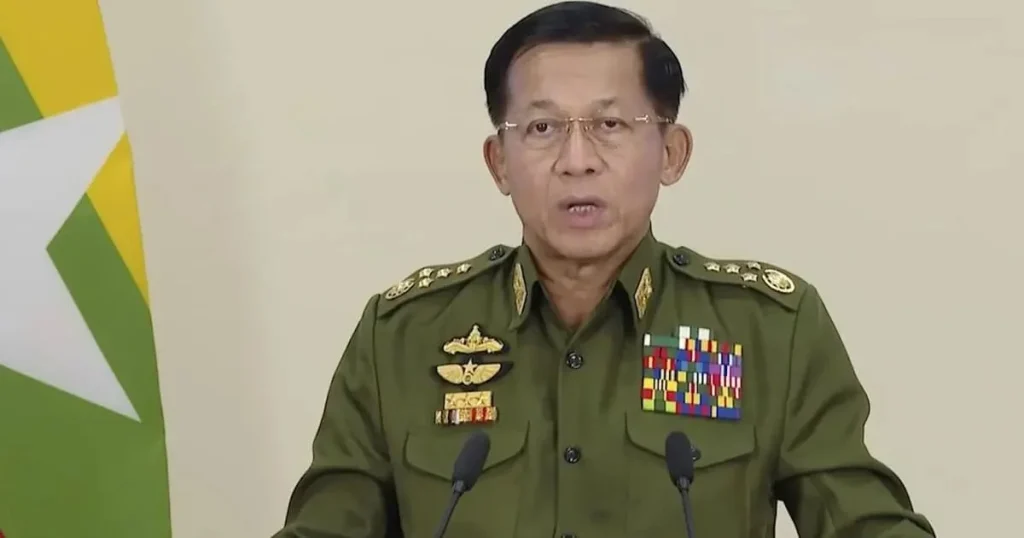
Nearly five years after the 2021 coup, Myanmar’s junta leader, Min Aung Hlaing, has signaled his preferred outcome for the upcoming elections. Speaking from a military base, the general urged citizens to support candidates who will work in harmony with the Tatmadaw (the nation’s military).
State-run media confirmed his directive. They reported that voters should prioritize those capable of “cooperating” with the armed forces. Most experts view this move as an effort to solidify military control through a civilian facade. Furthermore, the regime seeks the international recognition that it has failed to secure on the battlefield.
A Nation Fragmented by Ongoing Conflict
Despite the junta’s push for “legitimacy,” the country remains locked in a brutal civil war. Analysts and foreign diplomats argue that a stable government is unlikely while armed resistance continues across much of the territory.
Key election details include:
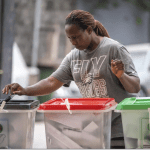
- Limited Voting: Polling will only occur in 202 of Myanmar’s 330 townships. These are areas where the military maintains some level of control.
- Three-Phase Process: The first round of voting begins this Sunday, December 28, 2025. The second phase follows on January 11, 2026, and a third on January 25, 2026.
- Uncertain Results: The junta has not yet announced official dates for the final release of results.
“A new iteration of indirect military rule will do nothing to resolve the armed conflict,”warned Richard Horsey, Senior Myanmar Adviser at Crisis Group. He noted that the nation remains deeply mired in crisis.
The Path from Coup to Ballot
Since Myanmar gained independence in 1948, the military has frequently dominated the political sphere. Min Aung Hlaing seized power in February 2021, ousting the democratically elected government of Nobel laureate Aung San Suu Kyi.
At the time, the military claimed—without proof—that her party, the National League for Democracy (NLD), had committed massive electoral fraud. Since the coup, the NLD has been dissolved. Additionally, many other anti-junta political groups have been barred from running.
The Competition: A One-Sided Race
Independent analysts view the current reforms as “cosmetic” rather than a true democratic shift.
- Excluded Opposition: Major anti-junta political groups cannot participate.
- The USDP: The military-backed Union Solidarity and Development Party is fielding the largest slate of candidates. Consequently, it is expected to win most seats.
- Military Transition: A USDP victory would allow Min Aung Hlaing to transition into a civilian leadership role while keeping military interests protected.
RELATED LINKS: Coup Leader Doumbouya Set to Win Guinea Presidential Vote


 Armenian Dram
 Ghana Cedi
 Gambian Dalasi
 Guinea Franc
 Nigerian Naira
 CFA Franc BEAC