As the sun sets over a nation gripped by its most significant challenge in years, a profound silence has fallen over Iran—not of peace, but of a digital blackout.
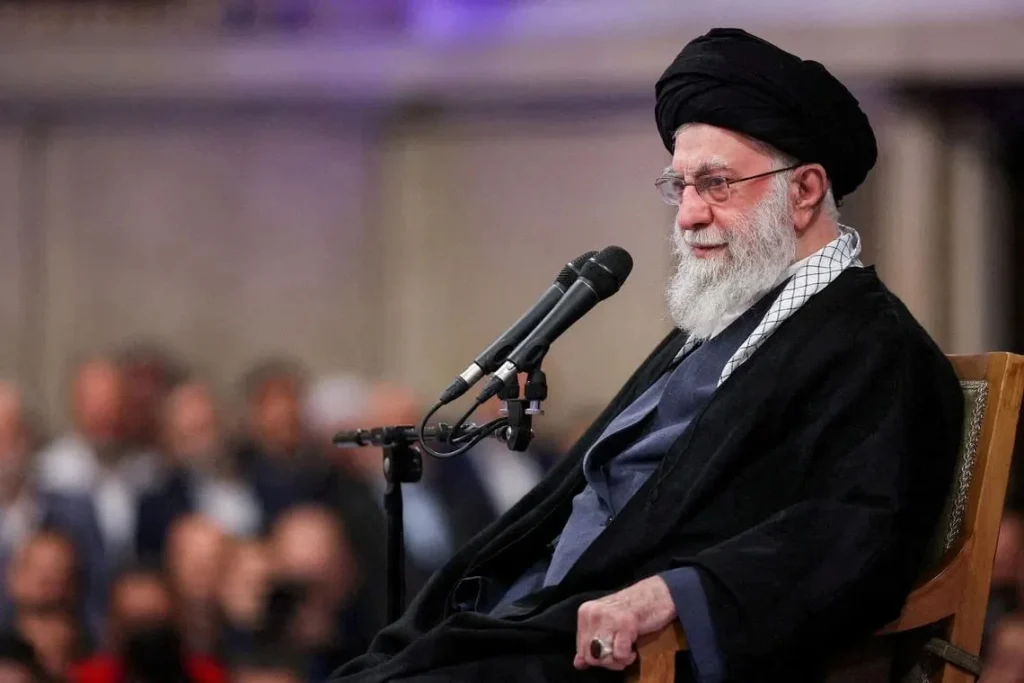
On the thirteenth day of a burgeoning nationwide uprising, Iranian state television has announced that Supreme Leader Ali Khamenei will soon break his silence. He is expected to address what the state characterizes as “terrorist actions,” even as the streets of Tehran and beyond simmer with a fury born of economic despair.
The Digital Iron Curtain Falls
Since Thursday, a “digital iron curtain” has descended. The internet monitoring group NetBlocks confirmed a near-total nationwide blackout that has severed Iranians’ connection to the global community. Traffic levels plummeted to near zero, a move analysts believe is a calculated attempt to stifle the coordination of protests and mask the scale of the government’s response.
This blackout coincided precisely with a high-stakes call to action from Reza Pahlavi, the exiled son of Iran’s last shah. From his home in the United States, Pahlavi urged citizens to join in a unified chorus of chanting from their rooftops and streets at 8:00 PM local time on Thursday and Friday. Despite the connectivity crisis, reports of defiant slogans echoing through the night suggest that the message reached its target.
From the Bazaar to the Barricades
What began as a localized strike by shopkeepers in Tehran’s Grand Bazaar infuriated by the free-fall of the rial—has evolved into a sprawling, multi-generational movement. Unlike the 2022 demonstrations led largely by women, this latest wave is increasingly characterized by young men venting a deeper, more structural disillusionment.
The slogans heard across the country highlight a shift in public sentiment:
- “Not Gaza, not Lebanon, my life for Iran”: A rejection of the regime’s regional military funding in the face of domestic poverty.
- Economic Despair: Chants targeting runaway inflation and the perceived mismanagement of the nation’s vast resources.
The Rising Human Cost
The crackdown has been swift and increasingly lethal. According to the Human Rights Activists News Agency (HRANA), at least 38 protesters and four security personnel have lost their lives in the escalating violence.
With more than 2,200 arrests documented, the clerical leadership is struggling to bridge the widening chasm between its revolutionary ideals and the expectations of a modern, suffering society.
Authorities have attempted a dual-track strategy: acknowledging economic grievances as “legitimate” while simultaneously deploying tear gas and security forces to dismantle any gathering that threatens the status quo.
Geopolitical Pressures
The unrest has not escaped international scrutiny. U.S. President Donald Trump recently issued a stark warning, threatening “severe action” if Iranian authorities resort to lethal force against peaceful demonstrators.
This external pressure adds a volatile layer to the Supreme Leader’s upcoming speech, as he must navigate a path between domestic iron-fisted control and international restraint.
As the nation waits for Khamenei’s televised address, the primary question remains: will the Supreme Leader offer concessions, or will he double down on the rhetoric of foreign-backed “terrorism”?


 Armenian Dram
 Ghana Cedi
 Gambian Dalasi
 Guinea Franc
 Nigerian Naira
 CFA Franc BEAC