In a historic milestone for a nation fractured by nearly three years of conflict, Prime Minister Kamil Idris officially announced the return of the Sudanese government to the capital, Khartoum, on Sunday, January 11, 2026.
This move effectively ends a long period of administration from Port Sudan, which served as the temporary wartime seat of power after the civil war erupted in April 2023.
The “Government of Hope” Reclaims the Capital
Prime Minister Idris, who took office in May 2025, framed this return as a major victory for state restoration. While addressing a large crowd in the Bahri (Khartoum North) district, he dubbed his administration the “Government of Hope.” Consequently, this title signals a strategic shift from mere survival to active national reconstruction.
The transition back to the capital follows the Sudanese Armed Forces’ (SAF) strategic recapture of the city in early 2025. Although many government buildings remain heavily damaged, the administration has already begun operating from makeshift headquarters. Their immediate goal is to oversee the comprehensive rehabilitation of the city’s infrastructure.
Prioritizing Reconstruction in 2026
By naming 2026 the “Year of Peace,” Idris outlined a critical roadmap for the capital’s recovery. Specifically, the government is prioritizing the following areas:
- Essential Services: Immediate efforts are focusing on restoring water, electricity, and sanitation networks that were looted or destroyed during the conflict.
- Healthcare & Education: The government has pledged to rebuild primary hospitals and reopen the University of Khartoum, which serves as a vital symbol of the nation’s academic heritage.
- Economic Stabilization: Furthermore, the 2026 budget aims to reduce inflation to 70% and boost GDP growth to 10% without introducing new taxes on burdened citizens.
A Grim Milestone and a Fragile Future
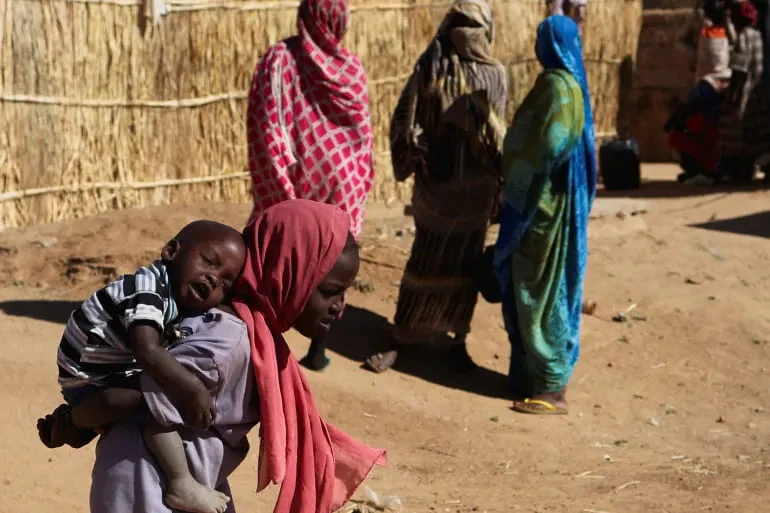
Notably, this return coincides with the grim 1,000-day mark of the war, which the nation reached on January 9, 2026. Despite the symbolic triumph in Khartoum, the humanitarian situation remains one of the world’s most severe crises:
- Mass Displacement: Over 11 million people have been uprooted across the country. This includes 1.2 million residents who have recently returned to find Khartoum in a state of devastation.
- Ongoing Conflict: While the capital has stabilized, intense battles continue in the Kordofan and Darfur regions. In these areas, the Rapid Support Forces (RSF) still hold significant territory.
According to United Nations estimates, rebuilding Khartoum’s core infrastructure alone will cost approximately $350 million. For the millions who fled, the return of the central government offers a glimmer of hope in a city currently pockmarked by ruins and makeshift cemeteries.
In other news, Ethiopia Breaks Ground on Africa’s Largest Airport


 Armenian Dram
 Ghana Cedi
 Gambian Dalasi
 Guinea Franc
 Nigerian Naira
 CFA Franc BEAC