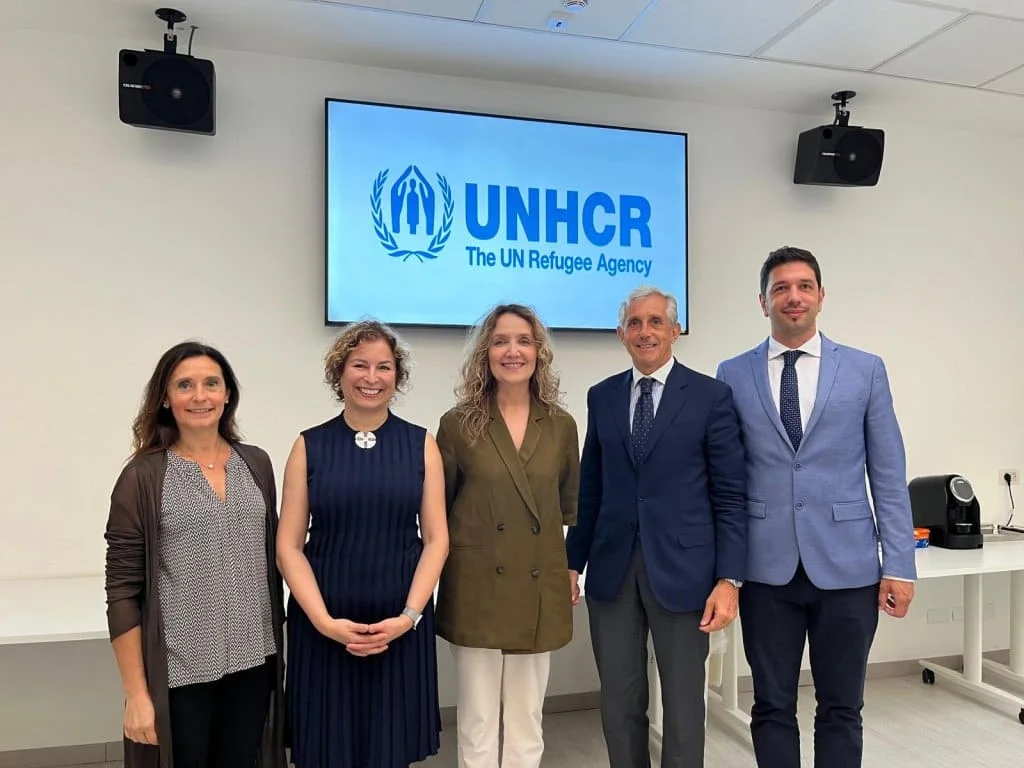
On January 13, 2026, the newly appointed United Nations High Commissioner for Refugees, Barham Salih, visited the Kakuma refugee camp in northwestern Kenya.
This trip marks his first official field mission since taking office on January 1st. During the tour, Salih commended the Kenyan government for its pioneering efforts to transition from traditional aid-dependent camps to integrated, self-sustaining communities.
Originally established in 1992 for those fleeing conflict in South Sudan, Ethiopia, and the Democratic Republic of Congo, Kakuma has undergone a historic transformation. Specifically, in April 2025, the settlement was officially redesignated as a municipality. This shift allows local government officials to eventually manage administration and essential services.
A Paradigm Shift: From Aid to Inclusion
During his visit, Salih described Kenya’s approach as a vital example of “inclusion and generosity” for the world to follow. He specifically lauded the Shirika Plan, a national framework designed to integrate refugees into local healthcare systems, schools, and the broader economy.
“Kakuma is a place of transformation and innovation. Rather than trapping refugees in aid dependency, we must prioritize solutions that allow people to live in dignity and contribute to society.” — Barham Salih
Salih emphasized that true protection for refugees involves moving beyond short-term humanitarian assistance. Consequently, the UN aims to focus on sustainable, long-term solutions.
He noted that allowing displaced persons to manage their own lives is not only an economic benefit but also a restoration of their fundamental human rights.
Leadership Informed by Personal Experience
Barham Salih’s appointment is historic because he is the first former head of state to lead the UN Refugee Agency (UNHCR). As the former President of Iraq (2018–2022), Salih himself was once a refugee who fled persecution.
Furthermore, Salih stated that his leadership would be grounded in “empathy, pragmatism, and a principled commitment to international law.” He believes his personal history provides a unique perspective on the pain of displacement and the necessity of finding a “home” where individuals can participate as productive members of a community.
Next Steps: Heading to Chad
Following his mission in Kenya, Salih is scheduled to travel to Chad to assess the situation in camps there. He intends to meet with national leadership to discuss how the international community can better support host nations facing severe funding shortfalls.
As global displacement hits record levels in 2026 and humanitarian budgets face intense pressure, Salih’s focus on self-reliance signals a major shift in how the UN plans to manage global refugee crises.
RELATED LINK: Greenland Crisis: Gold and Defense Stocks Surge






 Armenian Dram
 Ghana Cedi
 Gambian Dalasi
 Guinea Franc
 Nigerian Naira
 CFA Franc BEAC