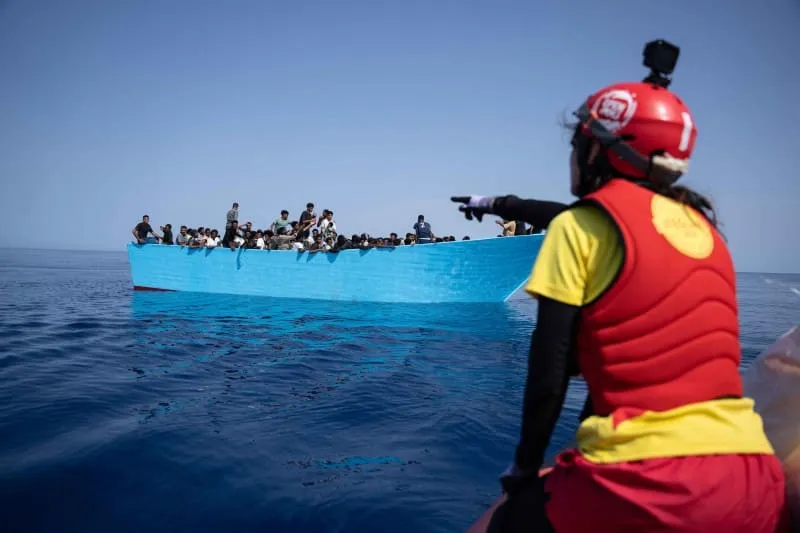
On Tuesday, a Dutch court sentenced 42-year-old Amanuel Walid (also known as Tewelde Goitom) to 20 years in prison. The ruling comes after a landmark trial exposed his leading role in a brutal human trafficking network. The presiding judge delivered a scathing verdict, stating that Walid acted with “no regard for human dignity.”
During his reign, Walid oversaw a violent migration route through Libya that preyed on thousands of vulnerable African refugees.
Walid was convicted on several severe charges, including:
- Human trafficking and extortion.
- Membership in a transnational criminal organization.
- Systemic torture of migrants.
The Libyan Route: Profit Through Pain
The court found that Walid’s criminal syndicate operated between 2014 and 2019. During this time, the group detained thousands of migrants in warehouses across Libya. While these individuals were seeking a safer life in Europe, they were instead subjected to extreme violence.
According to prosecutors, the operation was “ruthless and merciless.” The group abused victims specifically to extort large ransoms from their families. Presiding judge Rene Melaard noted that the syndicate’s primary goal was “to extort as much money as possible from vulnerable and helpless people seeking a better future.”
A Legal Landmark: Universal Jurisdiction
This trial represents the largest human trafficking case in Dutch history. Furthermore, it is a rare instance where a European court has successfully prosecuted a criminal network operating within Libya.
The prosecution was possible because of the legal principle of Universal Jurisdiction. This allows the Netherlands to prosecute foreign nationals for grave crimes committed abroad, provided that the victims now reside within Dutch borders.
The Defense: Identity and Silence
Walid was originally extradited to the Netherlands in 2022. Throughout the trial, his defense rested on two primary arguments:
- Mistaken Identity: Walid claimed he was not the notorious trafficker known as “Tewelde Goitom.”
- Right to Silence: He invoked his right to remain silent for the majority of the proceedings.
However, the judges ruled on Tuesday that the evidence definitively proved the man in the dock was indeed Walid.
Context: Libya’s Ongoing Transit Crisis
Since the fall of the Libyan government in 2011, the country has become a primary hub for human trafficking. The lack of centralized authority allows criminal organizations to establish violent hubs along the Mediterranean coast. Consequently, Libya remains one of the most dangerous transit points for migrants fleeing poverty and conflict.
READ ALSO: Lula and Trump Clash Over New ‘Board of Peace’ Scope











 Armenian Dram
 Ghana Cedi
 Gambian Dalasi
 Guinea Franc
 Nigerian Naira
 CFA Franc BEAC