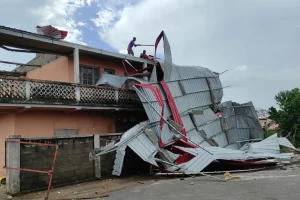
At least 20 people have been confirmed dead and dozens injured after Cyclone Gezani battered Madagascar, carving a path of destruction across the Indian Ocean island just days after another deadly storm.
Madagascar’s National Office for Risk and Disaster Management said most of the fatalities were caused by collapsing buildings after the powerful cyclone made landfall late Tuesday in the eastern port city of Toamasina. At least 33 people were injured, while thousands have been displaced.
Gezani struck with winds exceeding 195km/h (121mph), triggering widespread flooding, electricity outages and severe damage to homes and public infrastructure. Although wind speeds later weakened to about 110km/h (68mph), authorities warned the danger was far from over.
In an early Wednesday update, Meteo Madagascar cautioned that “widespread flooding, flash floods and landslides are highly likely” as the storm tracked westward toward the country’s central highlands. Red alerts — indicating imminent danger — were issued for several regions, including Analanjirofo, Atsinanana, Alaotra Mangoro, Analamanga and Betsiboka.
Residents described scenes of devastation in Toamasina, a city of about 400,000 people.
“It’s monstrous. Everything is devastated — roofs torn off, homes flooded, walls collapsed,” one resident told AFP after communications were briefly restored. The resident added that even well-built homes in affluent neighbourhoods were badly damaged, with power outages beginning hours before the cyclone struck.
Madagascar’s leader, Colonel Michael Randrianirina, who came to power following an October military coup, visited Toamasina to assess the damage and meet affected residents, according to footage shared by the presidency.
Forecasters from the Cyclone Monitoring Regional Specialised Meteorological Centre (CMRS) on France’s Réunion Island confirmed that Toamasina was “directly hit by the most intense part” of Gezani. They described the cyclone as potentially one of the most powerful to make landfall in the region during the satellite era, rivaling Cyclone Geralda in 1994, which killed more than 200 people.
Gezani’s impact comes just 11 days after Tropical Cyclone Fytia struck northwestern Madagascar, killing at least 12 people and displacing about 31,000, according to the UN humanitarian agency, OCHA.
While Gezani weakened to a tropical storm as it moved inland, forecasters warned it could regain cyclone strength as it crosses the Mozambique Channel toward mainland Africa.
OCHA said the storm damaged or destroyed more than 18,600 homes, nearly 500 classrooms and at least 20 health facilities, while also devastating rice fields and contaminating drinking water sources — raising serious public health concerns.
Scientists warn that climate change is intensifying tropical storms, with island nations like Madagascar increasingly vulnerable due to warming oceans, heavier rainfall and rising sea levels.







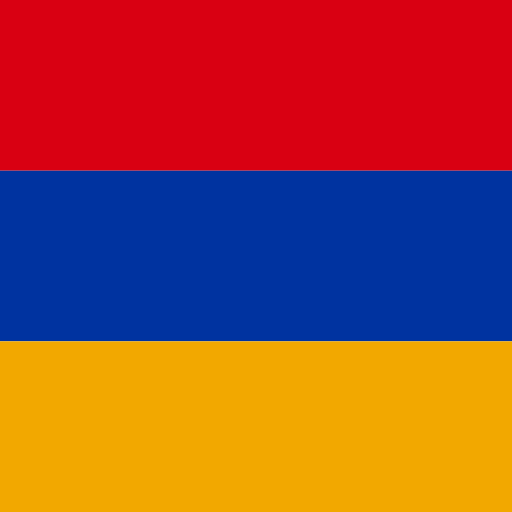 Armenian Dram
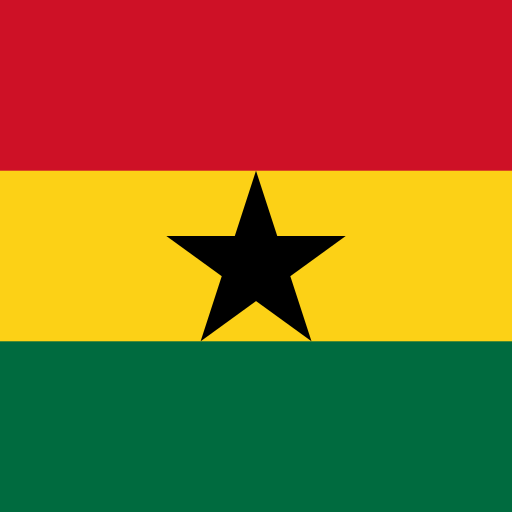 Ghana Cedi
 Gambian Dalasi
 Guinea Franc
 Nigerian Naira
 CFA Franc BEAC