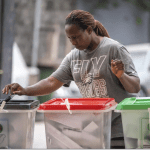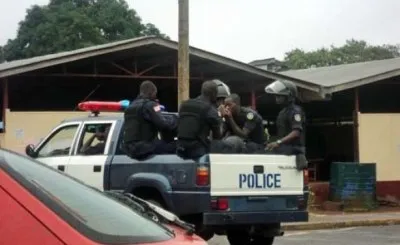
Liberia Bans ‘National Fula Security’ Group Amid Fears of Extremism Spillover
Authorities in Liberia have moved swiftly to ban a self-styled militia group amid mounting public anxiety over ethnic vigilantism and potential regional spillover from extremist movements.
The group, operating under the name National Fula Security of Liberia (NFSL), drew national attention over the weekend after videos circulated on social media showing dozens of men assembled in coordinated formation, some wearing what appeared to be security-style uniforms. The footage sparked widespread debate, with many Liberians questioning the legality and implications of an ethnic-based security outfit.
By Monday, the government acted decisively. In a strongly worded statement, the Ministry of Justice ordered the immediate cessation of all NFSL activities, stressing that no authorization had ever been granted for the group’s establishment or operation.
“National security, law enforcement, and public order are constitutional responsibilities of legally established state institutions,” the ministry said. “These responsibilities cannot and will not be delegated, assumed, or appropriated by private groups operating outside the framework of the law.”
The Liberia National Police also distanced itself from the group, clarifying that it had no prior knowledge of the NFSL and had not engaged with its members.
The ban comes against the backdrop of Liberia’s own traumatic history with factional militias during its civil wars, a legacy that continues to shape public sensitivity to any form of parallel security structure—especially those branded along ethnic lines.
Beyond Liberia’s borders, regional security experts warn that unregulated vigilante groups in parts of West Africa have, over time, evolved into destabilizing forces. In countries across the Sahel, loosely organized community defense groups have at times intersected with jihadist insurgencies, fueling cycles of violence and state fragility.
While analysts caution against stigmatizing the Fulani community—millions of whom are peaceful pastoralists and traders across the region—they note that ethnic branding in security matters can create dangerous optics. The concern is heightened by Liberia’s proximity to Guinea, where ethnic politics and cross-border sensitivities remain acute.
Prominent voices within Liberia have welcomed the government’s swift response. Former Lofa County senator Steven Z. Zargo described the emergence of an ethnic-branded security group as “a wake-up call,” while Montserrado County senator Abraham Darius Dillon emphasized that all private security firms must operate strictly under permits issued by the Ministry of Justice.
Notably, leaders within the Fulani community also criticized the group’s branding. Investment Ambassador Mohammed Bah, himself Fulani, said no ethnic group has the right to establish its own security structure, adding that national security “belongs solely to the Republic of Liberia.”
Government officials say the rapid intervention was aimed at preventing escalation before misinformation and suspicion could harden into conflict. “Prevention is always cheaper than dismantling an entrenched network,” one official said.
The episode highlights how quickly viral images can inflame tensions in a digitally connected society—and how fragile peace can be in post-conflict states. By asserting its monopoly over organized force, the government has sent a clear message at home and across the region: Liberia will not tolerate parallel security formations that risk undermining national stability or regional diplomacy.



 Armenian Dram
 Ghana Cedi
 Gambian Dalasi
 Guinea Franc
 Nigerian Naira
 CFA Franc BEAC