Ghana is set to submit a landmark resolution to the United Nations General Assembly, seeking global recognition of the African slave trade as “the most serious crime against humanity.”
President John Dramani Mahama made the announcement at the close of the African Union summit in Addis Ababa, describing the move as a historic step toward restoring truth, reconciliation, and equality.
According to Mahama, the resolution—expected to be tabled in March—will formally describe the trafficking and racialised enslavement of Africans as foundational crimes that shaped the modern world. “This UN resolution is just the first step,” he said. “It offers a historic opportunity to affirm the truth of our history and to lay the foundations for genuine reconciliation and real equality.”
The president stressed that the initiative is not about erasing history but acknowledging it. He argued that the legacy of the transatlantic slave trade continues to manifest in structural inequality, racial discrimination, and economic disparities across societies today. “Acknowledgment is the first step toward justice,” Mahama added.
Ghana’s push builds on earlier calls by former president Nana Akufo-Addo, who in November 2023 urged African nations to unite in demanding reparations for the transatlantic slave trade and the broader damage of colonialism.
Mahama said the proposal is being advanced in consultation with African states and partners within CARICOM, underscoring that the effort goes beyond financial compensation. “This is about restoring historical truth,” he said, adding that global recognition of the crime is essential to addressing its enduring consequences.
The transatlantic slave trade forcibly displaced millions of people from West and Central Africa over several centuries, a trauma whose scars remain deeply embedded in global systems. Ghana, the first sub-Saharan African country to gain independence in 1957, has positioned itself as a leading voice in preserving the memory of that history.
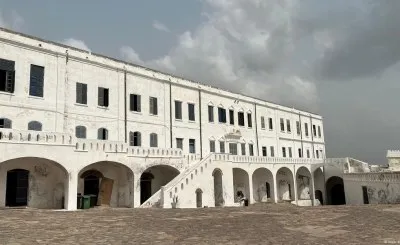
Sites such as Cape Coast Castle—a former colonial trading post involved in the slave trade and designated a UNESCO World Heritage Site in 1979—stand as stark reminders of the past the resolution seeks to formally acknowledge.
While the UN process may be lengthy, Mahama said Ghana’s immediate goal is clear: to secure global recognition that the slave trade represents one of the gravest injustices in human history. “The past cannot be changed,” he said, “but it can be acknowledged—and that acknowledgment can open the door to justice.”



 Armenian Dram
 Ghana Cedi
 Gambian Dalasi
 Guinea Franc
 Nigerian Naira
 CFA Franc BEAC