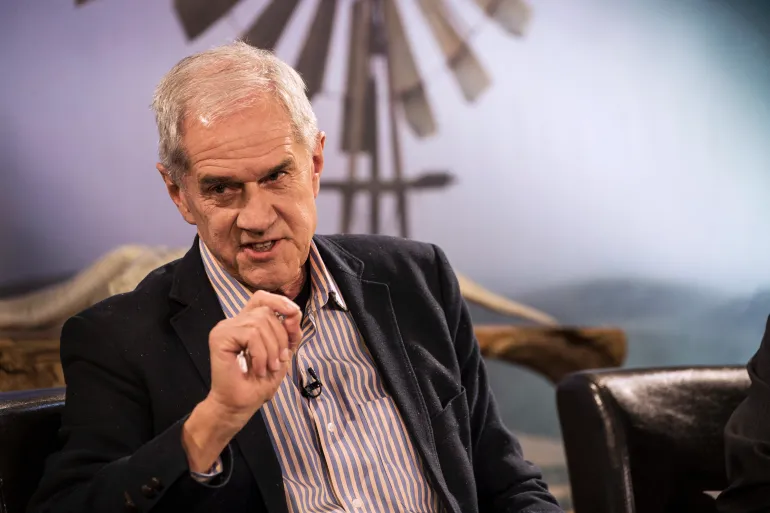
South Africa has appointed veteran negotiator Roelf Meyer as its new ambassador to the United States, in a move widely seen as an effort to reset strained diplomatic ties between the two nations.
Meyer, a key figure in negotiations that ended apartheid in the 1990s, will replace former envoy Ebrahim Rasool, who was expelled from Washington in 2025 under the administration of Donald Trump.
The appointment comes after months of diplomatic vacuum, with South Africa lacking formal representation in Washington since Rasool’s removal in March 2025.
Move to Repair Relations
Analysts say Meyer’s selection signals Pretoria’s intention to stabilise relations following a turbulent period marked by political tensions and policy disagreements.
The fallout began when Rasool was expelled after criticising elements of the U.S. political landscape, prompting then Secretary of State Marco Rubio to accuse him of inflammatory rhetoric.
Tensions escalated further over South Africa’s legal action against Israel at the International Court of Justice and domestic policies aimed at addressing historical land inequality. The Trump administration also froze portions of U.S. aid to South Africa and introduced a controversial refugee programme for white South Africans.
A Seasoned Negotiator
At 78, Meyer brings decades of political and diplomatic experience to the role. A former minister under the apartheid-era National Party, he later became one of the chief negotiators in talks with the African National Congress (ANC) that led to the end of white minority rule and the country’s first democratic elections in 1994.
During that period, Meyer worked closely with current President Cyril Ramaphosa, who also played a leading role in the negotiations.
Meyer later joined the ANC in 2006, further cementing his role in South Africa’s post-apartheid political landscape.
Next Steps
He is expected to assume office in Washington once diplomatic protocols are completed, according to the presidency.
Observers say his experience in high-stakes negotiations could prove critical in rebuilding trust and navigating complex geopolitical issues between Pretoria and Washington at a time of shifting global alliances.





 Armenian Dram
 Ghana Cedi
 Gambian Dalasi
 Guinea Franc
 Nigerian Naira
 CFA Franc BEAC