Damage to several undersea telecommunication cables has led to widespread internet outages across parts of Africa, with the disruption extending into a second day. Internet operators and monitoring organizations have warned that it could take weeks or even months to fully restore connectivity.
By Friday, at least eight African countries were experiencing significant internet issues, although specific details about what caused the cable damage remained unclear. Among the affected cables were the West Africa Cable System (WACS), MainOne, South Atlantic 3, and ACE cables, all of which are critical for data transmission across the continent.
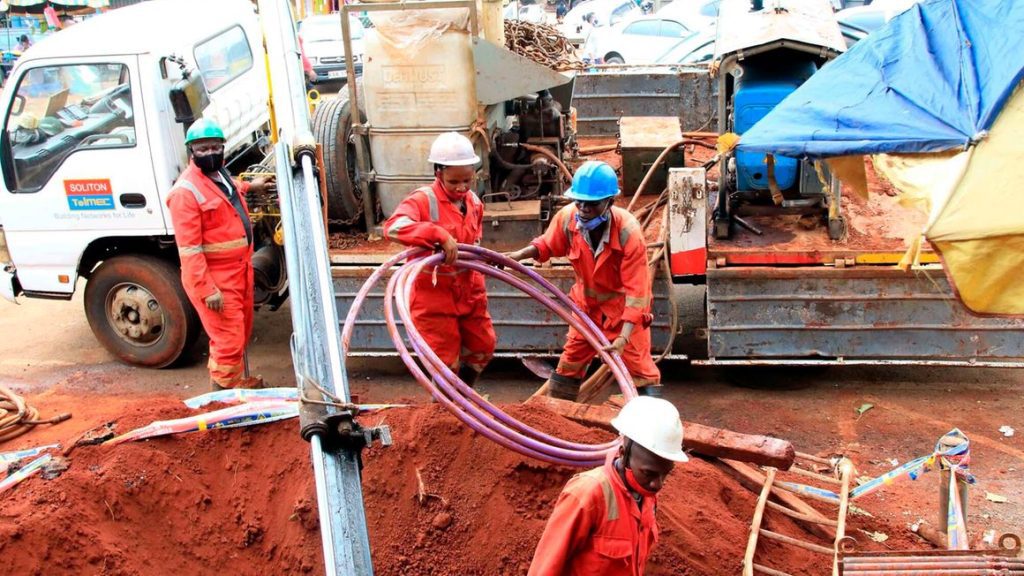
MTN Group Limited, one of Africa’s largest telecom providers, announced that repair efforts had already been initiated for the damaged ACE and WACS cables, with a repair vessel expected to be dispatched soon.
Countries most affected by the outages include Côte d’Ivoire, Liberia, and Benin, while Ghana, Nigeria, Cameroon, and South Africa reported milder disruptions. Other impacted nations include Burkina Faso, Gambia, Guinea, and Niger.
Major Connectivity Drops
Netblocks, a global internet connectivity tracker, reported severe drops in internet connectivity. In Côte d’Ivoire, connectivity plummeted to just 4% on Thursday morning. Liberia’s connectivity fell to 17%, with Benin and Ghana experiencing drops to 14% and 25% respectively. Ghana’s National Communications Authority (NCA) further confirmed that cable disruptions were also detected in Senegal and Portugal.
The NCA stated that the disruptions had led to a significant decline in data services, with mobile network operators working tirelessly to restore full connectivity. However, experts noted that the damage would require thorough assessment before repairs could begin—a process that could take considerable time.
Lengthy Repair Process
A spokesperson from internet analytics firm Cloudflare explained that repairs could take anywhere from weeks to months, depending on the severity of the damage, the location of the cables, and prevailing weather conditions. Repair ships must be deployed, and their availability depends on several factors, including the ownership and location of the impacted cables.
There is growing concern that if the situation is not resolved quickly, the outages could disrupt essential services, particularly in the hardest-hit countries like Côte d’Ivoire, where the effects of the disruption have been severe. Given Africa’s heavy reliance on mobile internet for business operations, the potential impact of a prolonged outage could be devastating.
Economic Impact
For instance, Ghana’s main stock exchange extended its trading hours by an hour on both Thursday and Friday to cope with the disruptions. Nigeria’s second-largest cement company also had to cancel a call with investors due to the connectivity issues affecting several countries.
The outages have also forced telecom networks to reroute data traffic around the damaged cables, which can strain the available capacity in other regions. This further complicates the situation, particularly in countries that depend on these critical communication arteries.
Vulnerabilities in Global Communication
This incident comes just weeks after three telecommunications cables were severed in the Red Sea, a crucial route for internet traffic connecting Europe, Africa, and Asia. That event disrupted 25% of the internet traffic between Asia and Europe, highlighting the vulnerabilities in the global communications infrastructure.
Undersea cables are the backbone of global internet connectivity, and many of these cables are funded by major tech companies like Google, Meta, Microsoft, and Amazon. Large telecom firms often rely on multiple cable systems to maintain uninterrupted service by rerouting traffic in the event of an outage.
Natural disasters, such as earthquakes, are also known to cause damage to undersea cables. For example, a major earthquake in Taiwan in 2006 severely disrupted global internet traffic. These incidents underscore the need for robust infrastructure and contingency planning to ensure that internet connectivity remains stable across regions.



 Armenian Dram
 Ghana Cedi
 Gambian Dalasi
 Guinea Franc
 Nigerian Naira
 CFA Franc BEAC