A multibillion-shilling health partnership between Kenya and the United States faces a major legal hurdle. The High Court has issued a temporary order freezing the agreement.
This ruling comes just days after officials signed the deal in Washington, D.C.
Justice Bahati Mwamuye delivered the ruling following an urgent application by the Consumers Federation of Kenya (COFEK). The watchdog argues that the deal violates multiple laws. Furthermore, they claim it exposes the sensitive medical records of millions of Kenyans to foreign entities.
The judge ordered the government to suspend “implementing or giving effect” to the Health Cooperation Framework.
Crucially, this suspension targets any clause involving the sharing of sensitive health data.
A Deal Under Fire
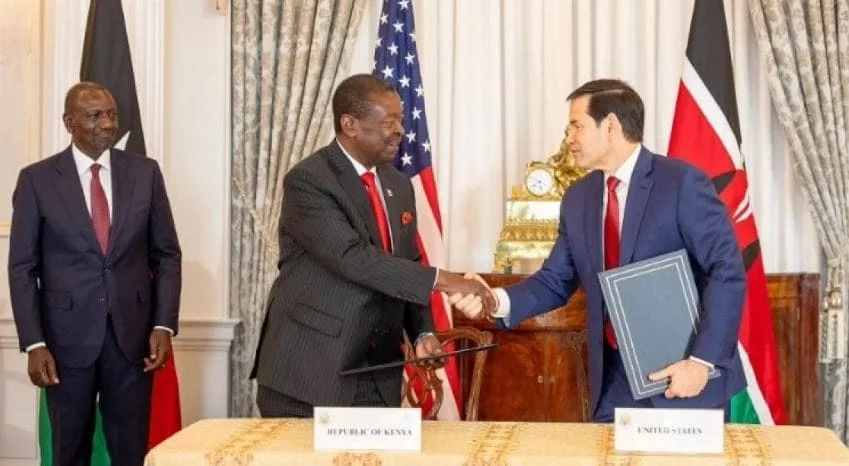
The controversy centers on the agreement signed on December 4. Prime Cabinet Secretary Musalia Mudavadi and U.S. Secretary of State Marco Rubio signed the pact. President William Ruto also attended the high-profile ceremony.
However, COFEK contends that the government rushed the deal without public consultation. Secretary-General Stephen Mutoro claims officials have already started implementing parts of the framework in secret.
The group’s petition argues that the agreement breaches several key laws:
- The Data Protection Act
- The Digital Health Act
- The Health Act
- New Digital Health
- Data Exchange regulations
According to Mutoro, these laws mandate strict safeguards. They also require public participation before the government shares any citizen’s health data.
What Happens Next?
The legal battle is set for early next year.
- December 17: Deadline for COFEK to serve court orders to all respondents.
- January 16: The government’s deadline to file a response.
- February 12: The case returns to court before Justice Lawrence Mugambi for further directions.
A Two-Front War
The government is fighting on two fronts. In addition to COFEK, Busia Senator Okiya Omtatah has filed a separate petition.
Omtatah warns that the framework’s structure invites corruption. He points out that the deal channels funds directly through ministries while allegedly removing external oversight.
Furthermore, the Senator argues that Kenya’s financial commitment is too high. Kenya pledged to match U.S. funding. Omtatah estimates this could burden the national budget with an additional US$850 million in costs.
“The agreement could undermine Kenyans’ right to health and equality by tying US support to political conditions,” Omtatah argued.
ALSO READ: AI and Audits: Nigeria Partners with France to Overhaul Tax System





 Armenian Dram
 Ghana Cedi
 Gambian Dalasi
 Guinea Franc
 Nigerian Naira
 CFA Franc BEAC