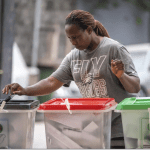
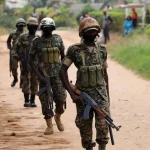
The presidential campaign in Guinea-Bissau officially launched this weekend. The start of the campaign is marked by the notable exclusion of the country’s main opposition party.
The nation’s approximately 860,000 registered voters are scheduled to go to the polls on November 23. They will elect a new president and 102 members of parliament.
Twelve presidential candidates are competing, with the incumbent president, Umaro Sissoco Embaló, appearing to be the favorite.
Major Opposition Coalition Barred
In an unprecedented move, the coalition led by the African Party for the Independence of Guinea and Cape Verde (PAIGC) has been barred from participating in both the presidential and legislative elections.
The country’s Supreme Court ruled that the PAIGC and its prominent candidate, Domingos Simões Pereira, had submitted their necessary nomination paperwork past the required deadline. Pereira, a former prime minister, is considered President Embaló’s foremost political rival.
His party previously won the last legislative election, which took place in 2023. This marks the first general election since Guinea-Bissau gained independence from Portugal in 1974 where the PAIGC will not be on the ballot.
Stability Concerns Loom Over the Vote
The upcoming vote carries significant importance for the country’s political stability. Just last Friday, several senior military officers were detained after being accused of plotting a coup. The army confirmed it had successfully neutralized an “attempt to subvert the constitutional order.”
The general staff of the armed forces issued a statement on the matter. They declared that this “sad episode,” which involved some high-ranking officers, “jeopardizes the peace and stability so desired for socio-economic development and the attraction of foreign investment.” Guinea-Bissau has experienced a long history of political instability, having undergone four successful coups and 17 attempted coups since 1974.
RELATED NEWS: Guinea Election Campaign Opens with Major Parties Excluded





 Armenian Dram
 Ghana Cedi
 Gambian Dalasi
 Guinea Franc
 Nigerian Naira
 CFA Franc BEAC