A historic legal ruling in Somalia has put a national spotlight on child safety. Hodan Mohamud Diiriye, 34, is currently awaiting execution.
She was convicted for the murder of Saabirin Saylaan, a 14-year-old orphan who worked as a domestic helper in her care.
The case concluded in late 2025, sending shockwaves through the country. This marks a rare instance where the state imposed the maximum penalty for child abuse. Consequently, many see it as a potential shift in how the legal system handles domestic violence.
The Tragic Case of Saabirin Saylaan
Saabirin was orphaned at just one year old. Her maternal great-aunt raised her until September 2025, when she was sent to live with Diiriye’s family in Galkayo. Within two months, the young girl suffered what police described as “routine physical abuse” and torture.
The evidence presented against Diiriye included:
- Digital Records: Investigators found videos and audio recordings on the defendant’s phone. In one recording, Diiriye expressed pleasure in the child’s pain.
- Forensic Reports: A post-mortem examination confirmed that Saabirin died from prolonged violence, including multiple deep stab wounds.
While Diiriye faces the death penalty, her husband, Abdiaziz Nor, was acquitted of murder. However, he received a one-year prison sentence and a $500 fine for criminal negligence.
Public Outcry and Calls for Reform
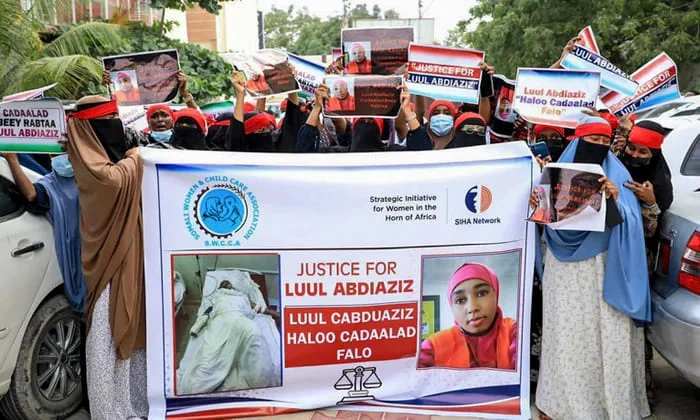
The horrific details of Saabirin’s death triggered mass protests in Galkayo. Hundreds of women and young people marched through the streets. They demanded that the formal justice system take precedence over traditional clan mediation.
In Somalia, violent crimes are often settled by elders through clan customs known as xeer. These customs typically focus on financial compensation rather than criminal punishment.
“We reject the attempts by traditional elders who want to resolve this case through clan customs or behind closed doors,” stated one young protester.
To build public trust, the regional court broadcast the trial live on social media. This allowed the entire nation to witness the pursuit of justice for the young girl.
Legal Frameworks vs. Cultural Realities
This case coincides with significant legal changes in Somalia. In October 2025, the Somali parliament ratified the African Charter on the Rights and Welfare of the Child. This charter aims to:
- Criminalize all forms of child abuse.
- Increase penalties for guardians who harm or neglect minors.
- Establish monitoring systems in schools, hospitals, and communities.
However, the government noted that the charter’s implementation must align with Islamic law. Activists argue that without local enforcement, many abuse cases will remain hidden within the privacy of extended families.
A Turning Point for Child Safety
While the verdict provides closure for Saabirin’s supporters, activists believe the struggle for child protection is just beginning.
The community remains vigilant as Diiriye’s lawyer prepares an appeal. Protesters continue to demand that justice is delivered without further delay.










 Armenian Dram
 Ghana Cedi
 Gambian Dalasi
 Guinea Franc
 Nigerian Naira
 CFA Franc BEAC