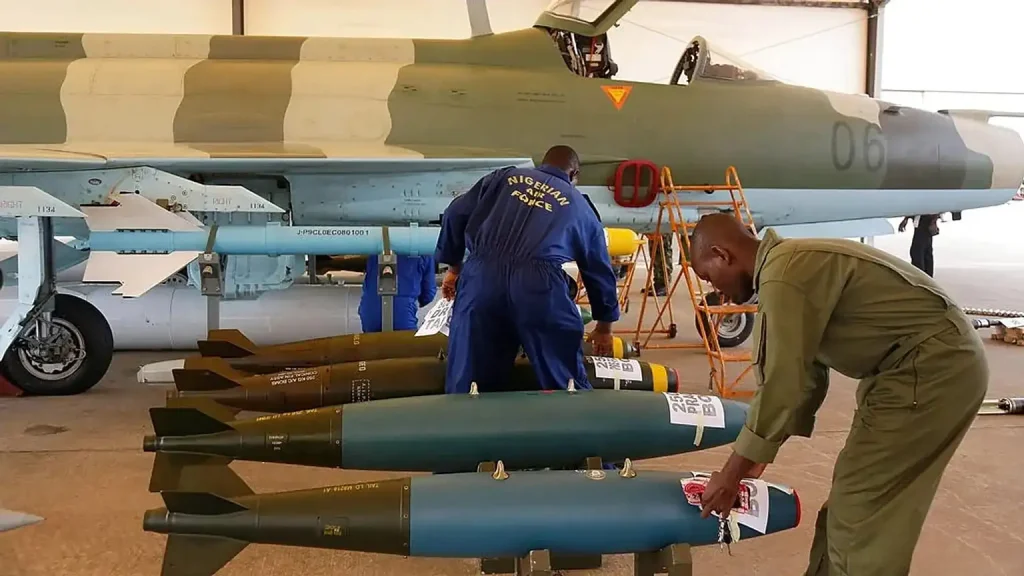
In a significant move to strengthen bilateral security ties, the United States officially delivered a consignment of “critical military supplies” to Nigeria on Tuesday, January 13, 2026. This delivery comes just weeks after U.S. forces conducted a controversial Christmas Day aerial operation in Nigeria’s northwest.
According to a statement from the U.S. Africa Command (AFRICOM), the supplies are intended to support Nigeria’s ongoing counter-terrorism efforts. While the specific details of the equipment remain classified, the move signals a deepening—though complicated—partnership between Abuja and the administration of U.S. President Donald Trump.
Background: The Christmas Day Strike in Sokoto
To understand the current state of affairs, one must look back at the events of late 2025. On the evening of December 25, U.S. forces carried out a series of strikes in Sokoto State.
The Nigerian government characterized the mission as a “joint operation” aimed at the Islamic State and a local jihadist group known as Lakurawa. While President Trump took full credit for the “Christmas present” to terrorists, local reports were more measured.
- Casualties: Precise figures remain unconfirmed by independent sources.
- Impact: Journalists on the ground reported damage to civilian structures and farmlands, raising concerns about the precision of the strikes.
- Sovereignty: Despite the “joint” label, the strikes initially caused embarrassment in Abuja due to the unilateral tone of the U.S. announcement.
Abuja’s $9 Million Lobbying Strategy
Parallel to the military cooperation, the Nigerian government has launched a massive diplomatic offensive in Washington. National Security Adviser Nuhu Ribadu recently signed a high-stakes agreement with an American lobbying firm, DCI Group.
The Details of the Deal:
- Cost: $750,000 per month (totaling $9 million over the initial contract).
- Goal: To reshape the narrative surrounding the violence in Nigeria.
- Focus: The firm is tasked with communicating Abuja’s efforts to protect Christian communities and ensuring continued U.S. support against West African jihadist groups.
This lobbying effort is a direct response to the “Christian genocide” narrative championed by some international observers and separatist groups in Nigeria’s southeast. Abuja maintains that the country’s security crisis is driven by terrorism and organized crime rather than religious persecution.
The “Genocide” Debate and Diplomatic Friction
Relations between Washington and Abuja hit a low point in late 2024. At the time, President Trump described the violence in Nigeria as “persecution” and “genocide” against Christians. Furthermore, the U.S. State Department designated Nigeria as a “country of particular concern” (CPC) due to alleged violations of religious freedom.
Nigeria—a nation roughly split between a predominantly Muslim north and a predominantly Christian south—has long rejected this characterization.
Officials argue that groups like Boko Haram and the Islamic State target all Nigerians, regardless of faith. Consequently, the new lobbying contract aims to correct what Abuja calls “misinformation” being spread in the U.S. capital.
Analysis: A Partnership of Necessity
Despite the rhetoric, both nations appear to have found common ground in military utility. Last week, a Nigerian security source indicated that a new arrangement has been reached: The Nigerian Air Force will lead future strikes, while the United States provides critical reconnaissance and intelligence.
However, the future remains uncertain. President Trump recently warned in a New York Times interview that while he preferred a “one-time strike,” he would not hesitate to authorize repeated interventions if the killing of Christians continues


 Armenian Dram
 Ghana Cedi
 Gambian Dalasi
 Guinea Franc
 Nigerian Naira
 CFA Franc BEAC