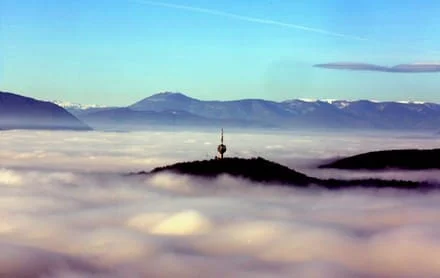
Life in the capital of Bosnia and Herzegovina ground to a halt this morning as severe air pollution descended upon the city. The toxic fog significantly reduced visibility, forcing authorities to extinguish festive holiday lights and halt all outdoor construction projects.
The deteriorating air quality caused widespread disruption to daily routines. Schools instructed parents to keep children indoors to avoid exposure, while commuters faced delays due to slowed traffic and cancelled flights. On the streets, many residents donned face masks in an attempt to filter out the noxious air.
The Geographic Trap
The primary driver of Sarajevo’s pollution crisis is its topography. Situated in a deep valley, the city is prone to temperature inversions—a weather phenomenon where a layer of warm air sits over a layer of cold air near the ground.
This atmospheric “lid” traps emissions from homes, cars, and factories within the valley floor, preventing them from dispersing. Consequently, the city suffers from dangerous pollution levels that exceed safety standards for more than 100 days every year.
Emergency Response and Long-Term Costs
In an effort to mitigate the immediate danger, local officials have enacted emergency protocols. These measures include banning heavy goods vehicles and prohibiting older, high-emission automobiles from entering the city center.
However, critics argue that these temporary fixes fail to address the root causes. The country’s transition to cleaner energy sources has been slow, and the reliance on fossil fuels and wood burning continues. This environmental stagnation has grim consequences: Bosnia and Herzegovina currently records one of the highest per-capita mortality rates attributed to air pollution in the world.
What are your thoughts? Comment Below: Chinese Brands Bet Big on US Retail Despite Trade Tensions










 Armenian Dram
 Ghana Cedi
 Gambian Dalasi
 Guinea Franc
 Nigerian Naira
 CFA Franc BEAC